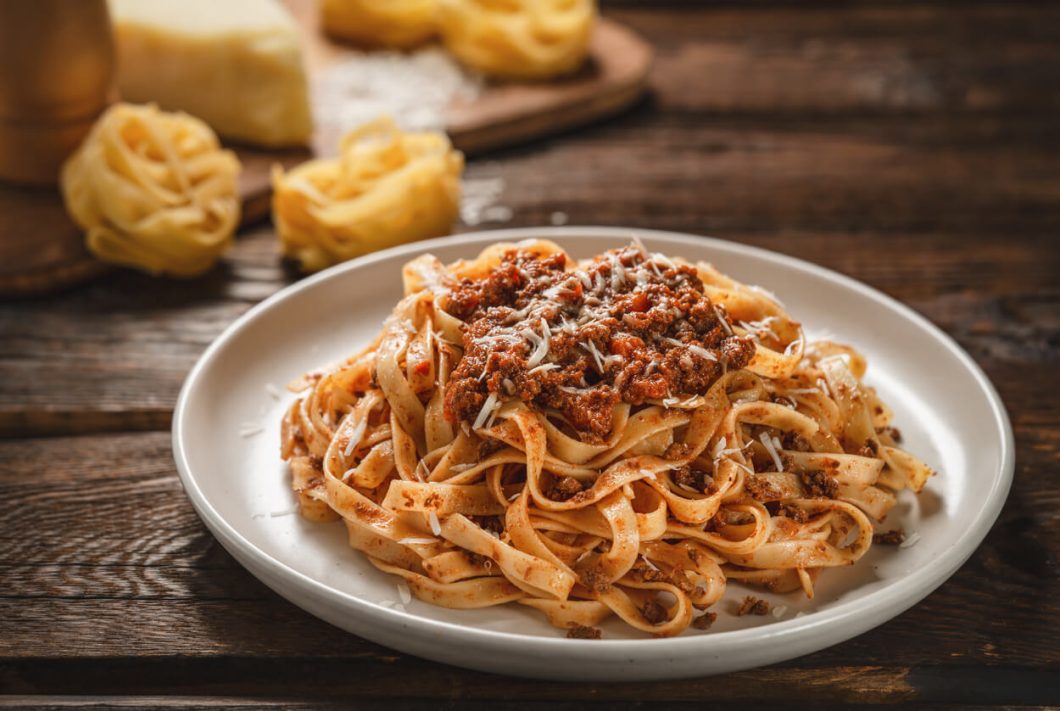
Tagliatelle al Ragù Bolognese has a way of settling in before it even hits the table. It’s the kind of dish you start early, knowing it needs time, not just to cook, but to come together properly.
It begins with the ragù. Meat, vegetables, and a bit of tomato, slowly building over low heat. Nothing rushed. From there, everything softens and deepens, turning into something rich, steady, and balanced. The longer it cooks, the more it feels complete.
Halfway through, the whole kitchen changes.
The sauce thickens, the flavors settle, and what started as separate ingredients becomes something unified. Then the tagliatelle comes in, fresh and tender, just enough to carry the ragù without getting lost in it. Because of this, each bite feels full, but never heavy.
It’s not something you rush to serve. Instead, it belongs to a longer meal, something shared, something that brings people together without needing much else. In the end, it’s simple, comforting, and exactly what it’s meant to be.
Tagliatelle al Ragu Bolognese is a classic Italian dish from the Bologna region, known for its rich, hearty meat sauce served with wide, flat pasta.
Prepare the Base: Heat olive oil in a large, heavy-bottomed saucepan over medium heat. Add the chopped onion, carrot, celery, and garlic. Sauté until the vegetables are soft and fragrant, about 5-7 minutes.
Cook the Meat: Increase the heat to medium-high. Add the ground beef (and pancetta, if using) to the pan. Cook, breaking up the meat with a spoon, until it is browned and no longer pink.
Deglaze: Pour in the red wine, scraping up any browned bits from the bottom of the pan. Allow to simmer until the wine has mostly evaporated.
Add Tomatoes and Simmer: Stir in the crushed tomatoes, tomato paste, broth, milk, bay leaves, a pinch of nutmeg, salt, and pepper. Bring to a simmer, then reduce the heat to low. Let the sauce simmer gently, partially covered, for at least 2 hours, stirring occasionally. If the sauce gets too thick, add a bit more broth or water.
Adjust Seasoning: Taste the ragu and adjust salt, pepper, and nutmeg as needed.
Boil Pasta: Bring a large pot of salted water to a boil. Add the tagliatelle and cook until al dente (usually about 3-4 minutes for fresh pasta, or follow package instructions for dried pasta).
Reserve Pasta Water: Before draining, reserve a cup of pasta cooking water.
Combine Pasta and Sauce: Drain the pasta and add it to the sauce, tossing gently to combine. If the sauce is too thick, add a little reserved pasta water to reach desired consistency.
Plate and Garnish: Serve the pasta hot, garnished with freshly grated Parmigiano-Reggiano cheese and a sprinkle of fresh basil or parsley, if desired.