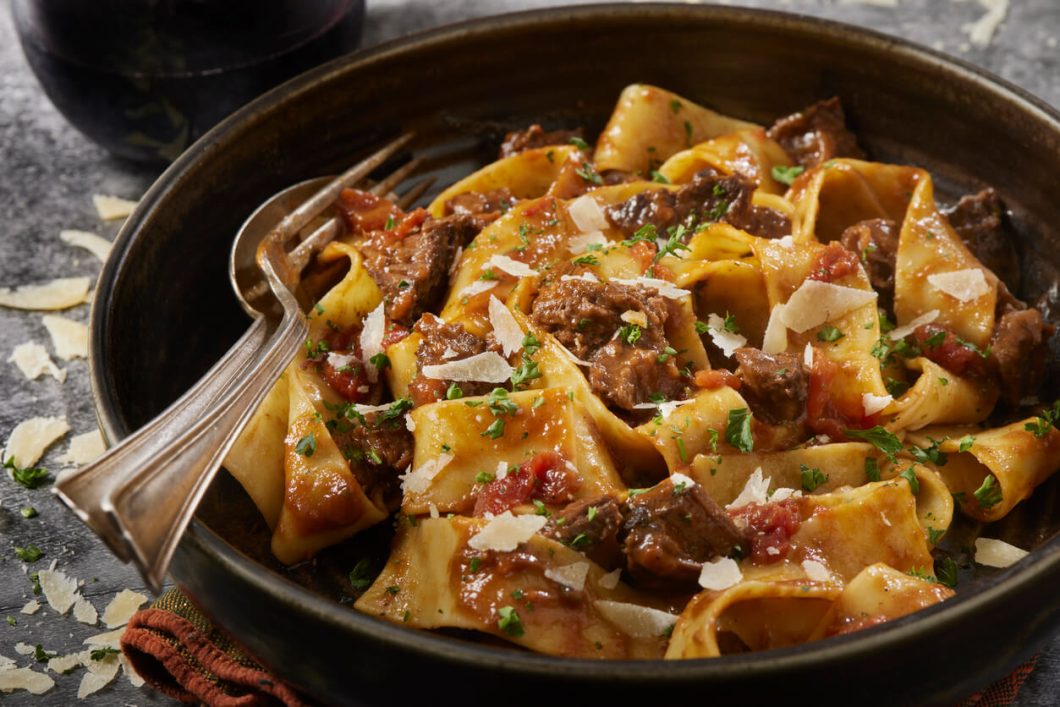
Pappardelle alla Lepre isn’t something you stumble into—it’s the kind of dish that feels tied to a place, to a season, to a way of cooking that takes its time. Deep countryside energy. Slow, patient, a little wild.
The sauce is where everything lives. Hare isn’t mild, it has that gamey depth that needs to be understood, not covered. It cooks down slowly with wine, herbs, maybe a bit of tomato, until it softens and settles into something rich, almost dark, layered in a way that builds with every bite.
You can smell it long before it’s ready.
That slow simmer, the way it fills the room… it’s not subtle. It’s grounding. Feels like something that belongs to colder days, heavier tables, meals that stretch longer than expected.
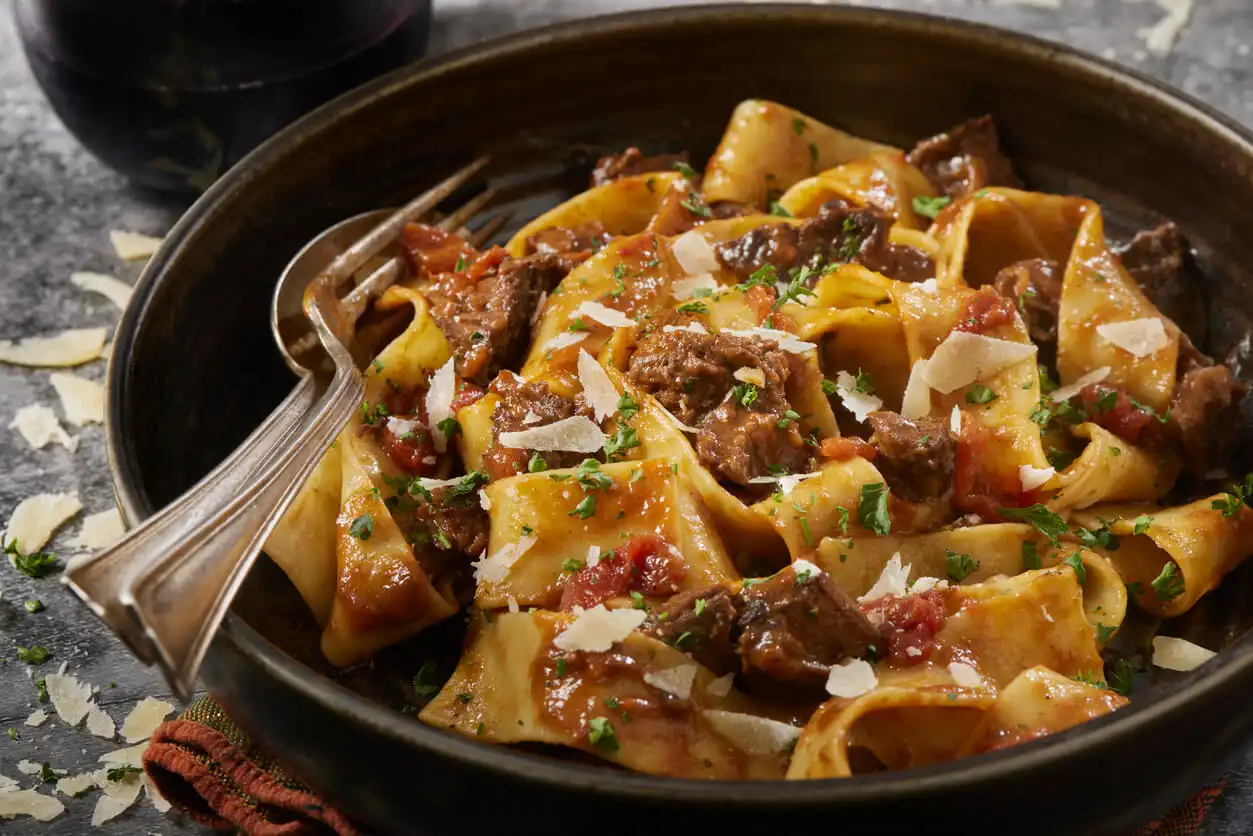
Then the pappardelle—wide, soft, made for this. It doesn’t just carry the sauce, it holds it, almost grips it, so every bite feels full, coated, complete.
It’s not a light dish. Not meant to be.
But when it’s done right, it’s one of those meals you remember. Not just for how it tastes—but for how it made the whole moment feel.
Prepare the Hare: If not already done by your butcher, joint the hare into manageable pieces. Season with salt and pepper.
Brown the Hare: In a heavy-bottomed pan or Dutch oven, heat the olive oil over medium-high heat. Add the hare pieces and brown on all sides. Remove the hare and set aside.
Sauté the Vegetables: In the same pan, add the pancetta and cook until it starts to render fat. Add the carrots, celery, onion, and garlic. Sauté until the vegetables are softened.
Deglaze: Pour in the red wine, scraping up any browned bits from the bottom of the pan. Let it simmer until the wine has reduced by half.
Cook the Hare: Return the hare to the pan. Stir in the tomato paste and chopped tomatoes. Add the broth, rosemary, thyme, and bay leaf. Bring to a boil, then reduce to a low simmer. Cover and let it cook for about 1.5 to 2 hours, or until the hare is tender and the sauce has thickened.
Shred the Meat: Once the hare is cooked, remove it from the sauce. When cool enough to handle, shred the meat from the bones and return it to the sauce. Discard the bones.
Cook the Pappardelle: Bring a large pot of salted water to a boil. Cook the pappardelle until al dente, according to the package instructions. Drain, reserving some pasta water.
Combine Pasta and Sauce: Toss the pappardelle with the hare sauce, adding a little pasta water if needed to loosen the sauce.
Serve: Plate the pappardelle and sauce. Garnish with fresh parsley and a generous sprinkle of grated Parmigiano-Reggiano or Pecorino cheese.
Pappardelle alla Lepre is best served immediately while hot. The dish pairs well with a full-bodied red wine, such as a Chianti or Barolo, which complements the rich flavors of the sauce. Enjoy a taste of the Italian countryside with this traditional and comforting meal.
Ingredients
Wine Pairing
Go with something that can stand up to it—a structured red like a Chianti Classico or, even better, a Barolo, both bringing enough depth, acidity, and tannin to match the richness of the hare without overpowering it.