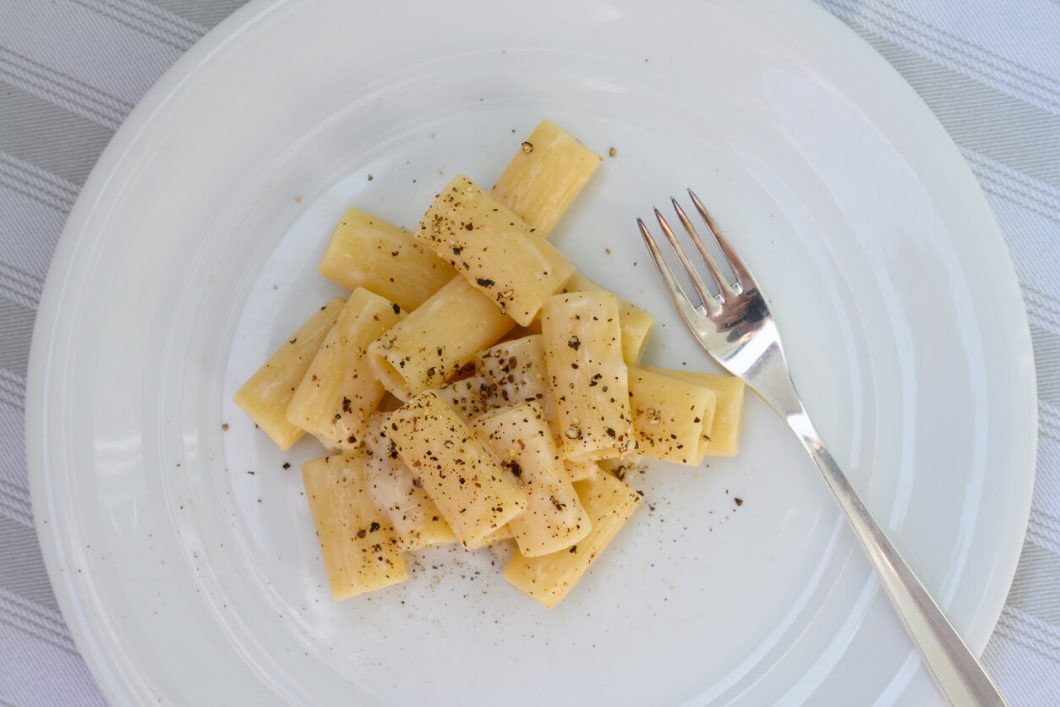
Cacio e Pepe is one of those dishes that looks almost too simple to matter—until you try to make it properly. No sauce to hide behind, no extras to lean on. Just pasta, cheese, pepper… and your technique.
It comes together fast, but it demands attention. The pecorino melts into the pasta water, turning into something creamy without ever seeing a drop of cream. Black pepper hits the heat and opens up—sharp, warm, a little aggressive in the best way.
If you rush it, it breaks.
If you get it right, though, something clicks. The sauce coats every strand, smooth and glossy, clinging just enough. Salty, peppery, rich—but still light enough that you don’t feel weighed down after.
It’s not flashy. It’s not forgiving either.
But when it works, it’s kind of perfect.
Prepare the Pasta Water: Bring a large pot of water to a boil. Season the water with salt until it’s as salty as the sea. The salt is crucial as it’s the only time you season the pasta itself.
Cook the Pasta: Add the pasta and cook until it’s just shy of al dente. Reserve 1 cup of the pasta cooking water before draining.
Toast the Peppercorns: While the pasta is cooking, if using whole peppercorns, toast them in a dry skillet over medium heat until fragrant, about 1 minute, and then crush them coarsely with a mortar and pestle or the bottom of a pan.
Create the Sauce: In a large bowl, mix the grated Pecorino Romano cheese with enough pasta water to make a creamy sauce. The cheese should melt smoothly when mixed with the water. Add the ground pepper to the sauce.
Create the Sauce: In a large bowl, mix the grated Pecorino Romano cheese with enough pasta water to make a creamy sauce. The cheese should melt smoothly when mixed with the water. Add the ground pepper to the sauce.
Serve: Once the pasta is well-coated with the sauce, serve immediately. Offer additional grated Pecorino and freshly ground black pepper on the side.
Ingredients
Perfect Wine Pairing
The sharp flavors of Pecorino cheese and the spicy kick of black pepper in Cacio e Pepe pair beautifully with a medium-bodied white wine with good acidity. A Frascati Superiore, a crisp and minerally white wine from the Lazio region (also the home of Rome), complements this dish wonderfully. Its zesty citrus notes and underlying minerality will cut through the richness of the cheese while harmonizing with the piquancy of the pepper.