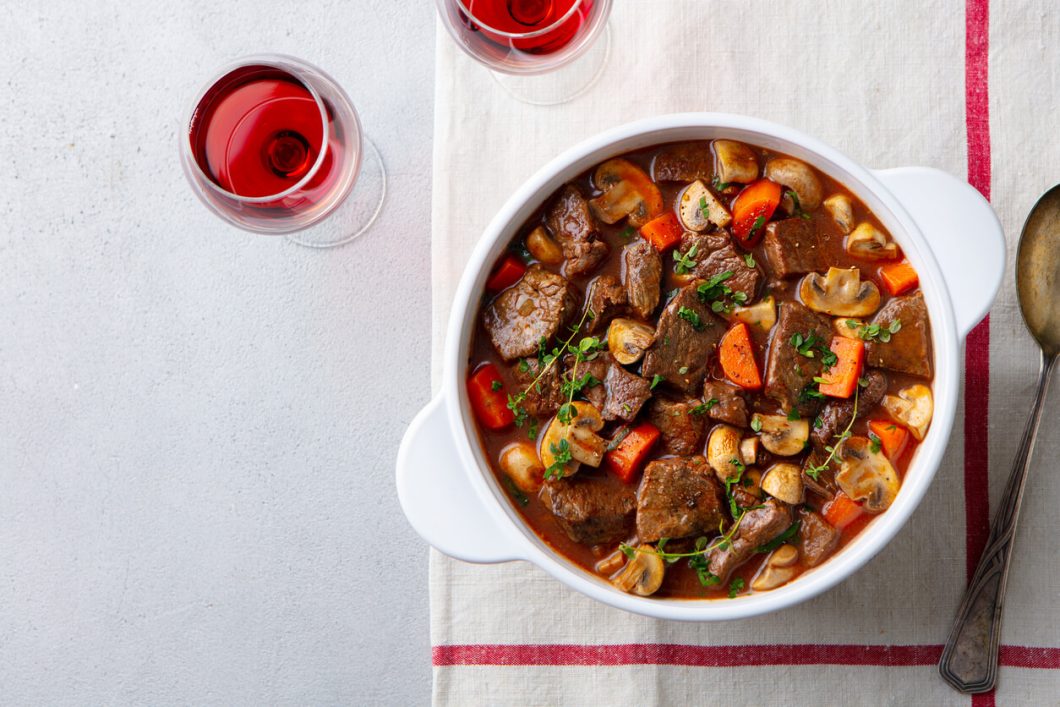
Brasato al Barolo is not something you decide to make on a whim. It’s a slow commitment—one that usually starts with opening a bottle of Barolo and realizing most of it is going into the pot… and you’re completely fine with that.
The beef sits in it first, soaking, taking on that deep, almost perfumed richness. Then comes the long cook. Low heat, time stretching out, the wine slowly reducing, the vegetables breaking down, everything merging into something darker, fuller, more intense. You don’t rush it—you really can’t.
At some point, you lift the lid and just stand there for a second.
The aroma is heavy in the best way. Wine, meat, herbs… something almost earthy, something that feels like it belongs to colder days and longer meals. And the meat—when it’s ready—doesn’t need a knife. It just gives in.
The sauce is everything.
Thick, glossy, built from hours of patience. It clings, coats, pulls everything together into something that feels less like a dish and more like an experience you sit with for a while.
It’s rich, yes. But more than that—it’s grounding. The kind of meal you make when it matters, when you want the table to feel full, the evening to slow down, and the food to speak for itself.
Marinate the Beef: Season the beef with salt and pepper and place it in a large bowl. Pour the Barolo wine over the beef, add the chopped vegetables, and let it marinate in the refrigerator for at least 4 hours, preferably overnight.
Sear the Beef: Remove the beef from the marinade (reserve the wine and vegetables) and pat it dry with paper towels. In a large Dutch oven or heavy pot, heat some olive oil over high heat. Sear the beef on all sides until browned, then set aside.
Sear the Beef: Remove the beef from the marinade (reserve the wine and vegetables) and pat it dry with paper towels. In a large Dutch oven or heavy pot, heat some olive oil over high heat. Sear the beef on all sides until browned, then set aside.
Deglaze and Simmer: Add the tomato paste and cook for a minute before pouring in the reserved wine to deglaze the pot. Bring to a simmer and reduce the wine by half. Add the beef stock, bay leaves, rosemary, thyme, and any optional flavorings like juniper berries or orange zest.
Braise the Beef: Return the beef to the pot. The liquid should come about halfway up the sides of the meat. Cover and simmer on low heat for about 3-4 hours, or until the beef is very tender.
Rest and Serve: Once the beef is cooked, remove it from the pot and let it rest for about 15 minutes before slicing. Strain the cooking liquid and reduce it further if desired to make a sauce. Season the sauce with salt and pepper to taste.
Serve: Slice the beef and serve it with the sauce spooned over the top. Garnish with fresh herbs if desired.
Ingredients
Perfect Wine Pairing
Since the beef has been braised in Barolo, pairing it with a glass of the same wine used in cooking would be fitting. A Barolo is a full-bodied wine with robust tannins and a complex bouquet with roses, cherries, and earth notes. Its intensity matches the rich and deep flavors of the brasato beautifully.
If Barolo is unavailable or you prefer to enjoy it alone, another excellent pairing is a Barbaresco. Like Barolo, Barbaresco is made from the Nebbiolo grape. It shares many of the same flavor profiles but often comes with a slightly softer edge, making it a harmonious complement to the savory beef dish.