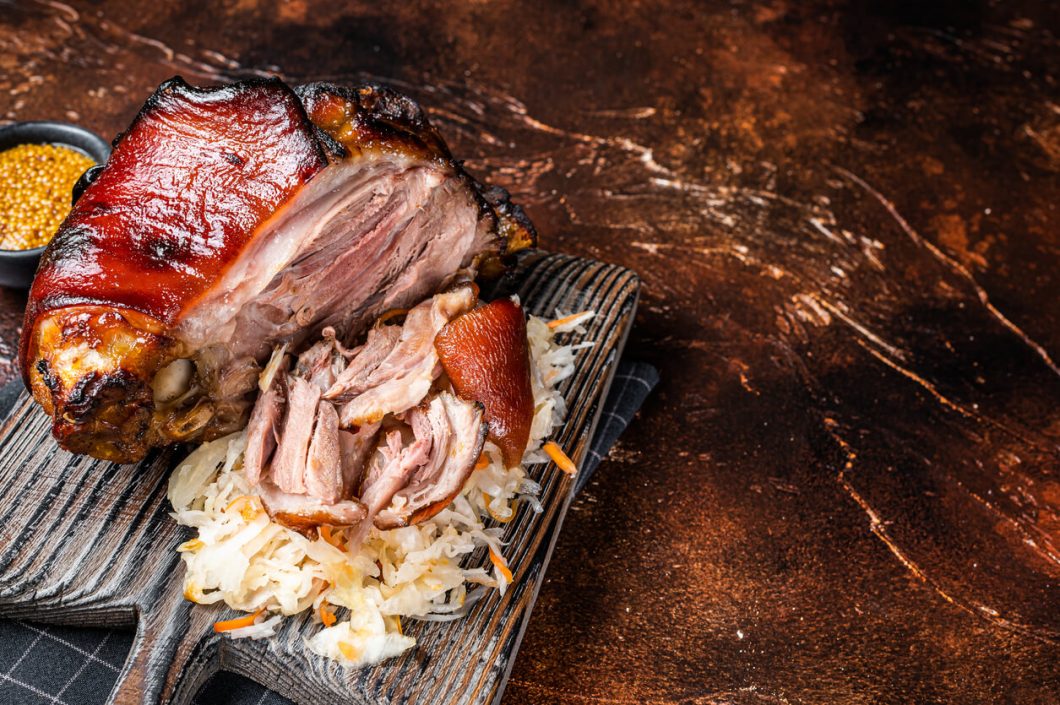
Stinco di Maiale is not a quiet dish. It’s bold, generous, and made for the kind of meals that stretch a little longer than planned. The kind where something’s been slowly cooking for hours, and you can smell it the moment you walk into the house.
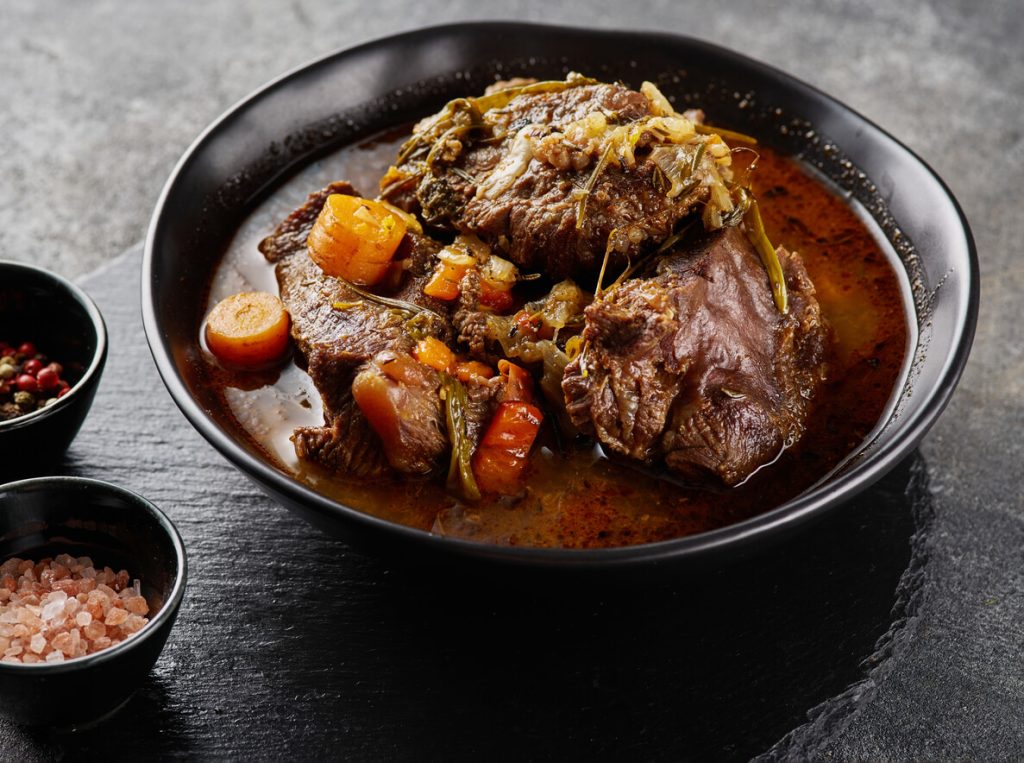
It starts off tough, almost stubborn. A proper pork shank doesn’t give in easily. But give it time—wine, herbs, vegetables, low heat—and everything begins to change. The meat softens, the fat melts into the sauce, and what comes out at the end is something deeply tender, almost falling apart before you even touch it.
You don’t rush this.
That sauce—rich, slightly sticky, full of everything it’s been cooking in—clings to every bite. It’s the kind of dish that begs for something alongside it. Creamy polenta, roasted vegetables, maybe just a piece of bread to make sure nothing gets left behind.
It’s rustic, yes. But there’s something undeniably comforting about it. Heavy in the best way, satisfying without apology, and built for evenings where the table matters just as much as the food.
Preheat the Oven: Preheat your oven to 325°F (163°C).
Season the Pork Shanks: Season the pork shanks liberally with salt and pepper.
Brown the Shanks: In a large oven-proof pot or Dutch oven, heat the olive oil over medium-high heat. Add the pork shanks and brown them on all sides, about 2-3 minutes per side. Remove the shanks from the pot and set aside.
Sauté the Vegetables: In the same pot, add the onion, carrots, celery, and garlic. Sauté until the vegetables are softened, about 5 minutes.
Deglaze: Pour in the white wine to deglaze the pot, scraping up any browned bits from the bottom with a wooden spoon.
Add Liquids and Pork Shanks: Add the stock, diced tomatoes, bay leaves, thyme, and rosemary to the pot. Bring to a simmer. Return the pork shanks to the pot, spooning some of the liquid and vegetables over them.
Braise: Cover the pot with a lid and transfer it to the preheated oven. Braise for about 2.5 to 3 hours, or until the meat is very tender and falls off the bone.
Serve: Remove the bay leaves. Serve the pork shanks with the cooking liquid and vegetables as a sauce, alongside mashed potatoes, polenta, or your choice of side.
Ingredients
Perfect Wine Pairing
A hearty and rich dish like Stinco di Maiale pairs wonderfully with a full-bodied red wine that can stand up to the robust flavors of the meat. A Barolo from Piedmont, Italy, with its deep flavors, firm tannins, and hints of earthiness, is an excellent choice. This wine complements the savory pork and enriches the overall dining experience.
Alternatively, a Chianti Classico, known for its bright acidity and notes of cherries and spices, can also beautifully balance the pork shank’s richness while enhancing the sauce’s herbal and tomato-based components.