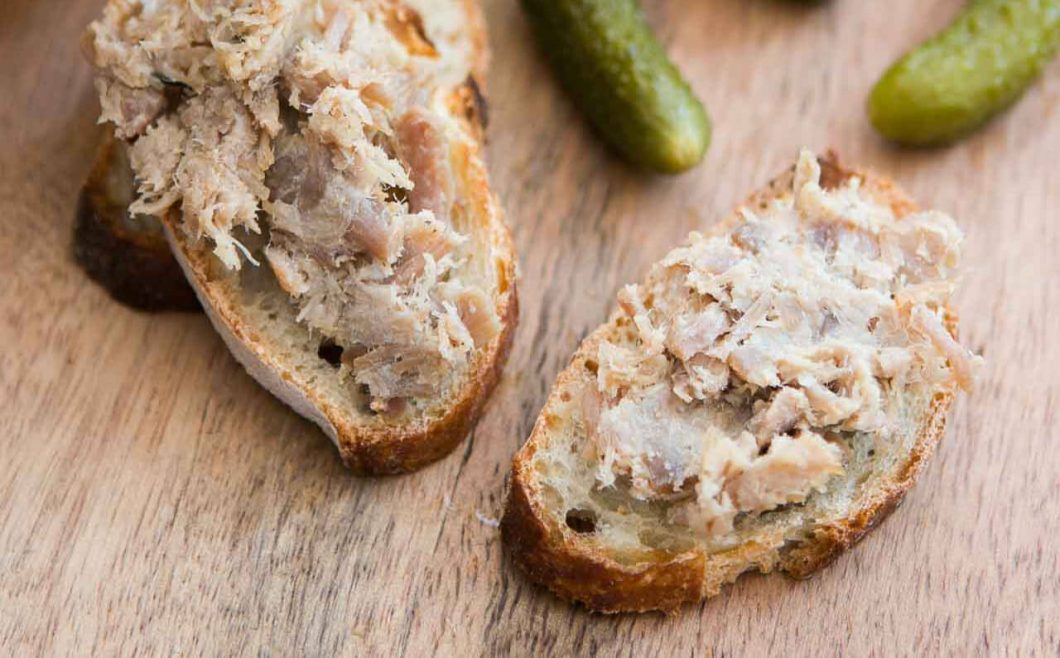
Rillettes doesn’t make much of an impression at first. It sits there quietly, a little rough around the edges, nothing polished about it, just something meant to be shared without ceremony. A jar, a knife, some bread—that’s all it asks for.
But it doesn’t begin there.
It starts much earlier, in the slow cooking that defines it. Pork left to soften over time, not pushed, not hurried, just allowed to give in gradually until there’s nothing left to hold it together but its own richness. The texture changes almost without notice, becoming tender, then softer still, until it reaches that point where it no longer resists at all.
There’s no shortcut to that.
Time does the work, shaping it into something deeper than it looks. What you end up with isn’t refined, and it’s not meant to be. It carries that sense of something made patiently, something that doesn’t need to prove anything.
When it’s ready, you don’t hold back.
You spread it generously onto bread, thicker than you intended, letting the texture speak for itself. It’s rich, but not overwhelming, the kind of richness that builds slowly, settling in rather than hitting all at once.
And without thinking about it, you go back for another.
It doesn’t ask for attention, but it creates a moment anyway—something simple that turns into something worth lingering over, even if you didn’t plan for it.
Cook the Pork: Combine the pork shoulder, pork belly, fatback, garlic, bay leaves, thyme, nutmeg, salt, and pepper in a large, heavy-bottomed pot. Add just enough water or stock to cover the meat. Bring the mixture to a simmer over low heat, then cover and continue to cook gently for about 4-6 hours, stirring occasionally. The meat should be very tender and easily shredded.
Shred the Meat: Remove the bay leaves and let the mixture cool slightly. Using two forks, shred the meat while removing any large pieces of fat or gristle. The texture should be fine and spreadable.
Reduce the Cooking Liquid: If there's a lot of liquid remaining, return the pot to the heat and simmer uncovered until the liquid has reduced and the meat mixture is moist but not watery.
Transfer to Containers: Pack the rillettes into small jars or ramekins, pressing down to eliminate air pockets. Pour a thin layer of melted fat over the top to seal the rillettes. Cover and refrigerate for at least 24 hours to allow the flavors to meld.
Serve: Serve the rillettes spread on toasted or crusty bread, accompanied by cornichons or pickled onions.
Ingredients
Perfect Wine Pairing:
- Loire Valley Chenin Blanc: A dry, crisp Chenin Blanc can cut through the richness of the rillettes with its acidity while complementing the dish’s flavors.
- Alternative: A medium-bodied Pinot Noir with its fruity notes and subtle earthiness can also pair beautifully with the savory pork.