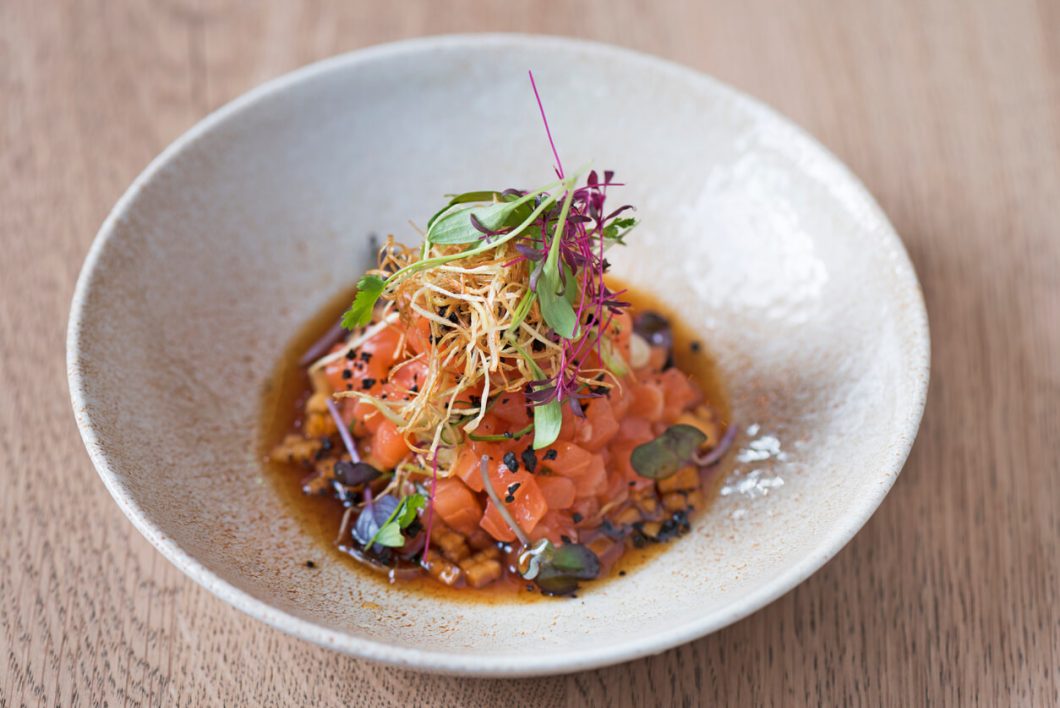
Salmon tartare isn’t something you really cook—it’s something you approach with a bit of care. There’s no heat to rely on, nothing to hide behind, just the ingredients as they are, which means every step feels a little more intentional.
It starts with the fish, and it has to be right. Fresh, clean, almost buttery before you’ve done anything to it. You cut it by hand, not too fine, not overly precise, just enough to give it structure while still letting it feel like what it is. That texture matters more than anything else.
From there, everything else comes in quietly.
A touch of citrus to lift it, something sharp in the background, herbs that don’t announce themselves but are there if you pay attention. Maybe a bit of shallot, maybe something else, but always with restraint. You’re not building flavor as much as you’re adjusting it, nudging it slightly without ever taking control.
You taste it once, then again.
And somewhere in between, without really thinking about it, it settles into place. Balanced, fresh, complete in a way that doesn’t feel constructed.
It’s light, but not empty.
There’s enough richness in the fish to carry it, enough brightness to keep it moving. It works at the beginning of a meal, but it doesn’t need anything around it to make sense. A piece of bread, something cold in a glass—that’s already enough.
It doesn’t ask for much.
Just attention, and a willingness to leave it alone once it’s right.
Prepare the Salmon: Place the salmon in the freezer for about 20 minutes to firm up, which will make it easier to dice. Cut the salmon into small, even dice, about 1/4-inch pieces. Place the diced salmon in a medium bowl.
Mix the Ingredients: Add capers, shallots, dill, chives, Dijon mustard, olive oil, and lemon juice to the salmon. Gently mix until well combined. Season with salt and pepper to taste.
Chill: Cover and refrigerate the tartare for at least 30 minutes to allow the flavors to meld.
Serve: Serve chilled, garnished with lemon wedges. Salmon tartare can be served on toast points, crackers, or cucumber slices.
Ingredients
Perfect Wine Pairing:
- Sancerre (Sauvignon Blanc): A crisp Sancerre from the Loire Valley in France, with its high acidity and citrus notes, complements the fatty richness of the salmon while echoing the tartness of the lemon in the tartare.
- Alternative: If you prefer a different wine, a dry Riesling or Champagne can also pair beautifully, offering a balance between the dish’s richness and the wine’s acidity.
When enjoying Salmon Tartare, ensure the wine is well-chilled, and the dish is served cold to fully appreciate the harmony of flavors.