Ratatouille isn’t something you approach with precision. It’s the kind of dish you fall into—usually in the middle of summer, when the vegetables are at their peak and it feels almost unnecessary to do much to them at all.
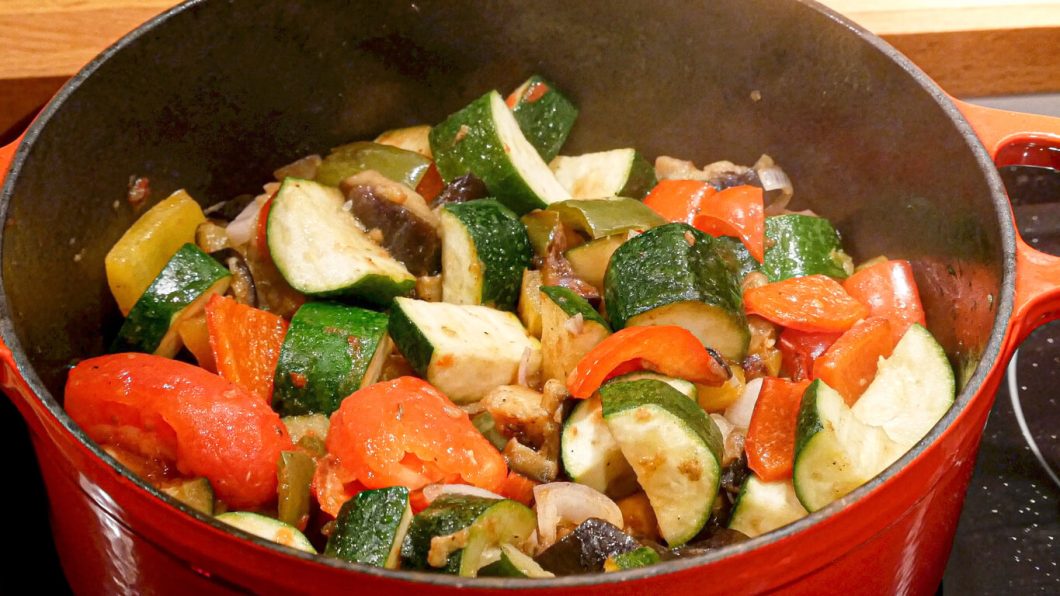
There’s no strict beginning. You start slicing, chopping, moving through eggplant, zucchini, peppers, tomatoes that are just on the edge of overripe but exactly right for what this needs to become. Olive oil warms in the pan, garlic follows, herbs find their way in without much thought. Everything builds slowly, without urgency.
At first, it doesn’t look like much.
Pieces scattered, colors too bright, nothing quite connected yet. But Ratatouille isn’t about that first stage. It’s about what happens as it sits, as the heat does its work quietly in the background.
The vegetables begin to soften, to give in slightly, releasing their juices without losing their identity. They don’t disappear into each other—they settle. What emerges is something cohesive but still textured, where each element remains present, just deeper, more rounded, more complete.
It becomes something that feels warm in a different way—not heavy, but grounded. Sun-soaked, almost.
You can serve it straight from the pan while it’s still warm, or let it cool and take on a different character entirely. It holds well, even improves, as the flavors continue to settle into one another. The next day, it often feels more finished, more intentional.
Spoon it over toasted bread, pair it with something simply grilled, or leave it exactly as it is.
Ratatouille doesn’t need much.
It just needs time.
Prepare the Vegetables: Salt the eggplant and zucchini cubes and let them sit in a colander for about 20 minutes to draw out moisture. Rinse and pat dry.
Cook the Vegetables: In a large skillet or Dutch oven, heat the olive oil over medium heat. Sauté the onions and garlic until they're translucent. Add the bell peppers and cook until they start to soften. Add the eggplant, zucchini, and yellow squash, cooking until they begin to brown slightly. Stir in the tomatoes, thyme, rosemary, and bay leaf. Season with salt and pepper.
Simmer: Reduce the heat to low and let the mixture simmer, uncovered, for about 30-40 minutes, stirring occasionally. The vegetables should be tender but not mushy.
Serve: Remove the bay leaf. Taste and adjust the seasoning if necessary. Garnish with fresh basil before serving. Ratatouille can be served hot, at room temperature, or cold.
Ingredients
Perfect Wine Pairing:
- Provence Rosé: A dry Rosé from Provence complements the medley of vegetables without overpowering the dish’s flavors.
- Alternative: A light-bodied red wine like Pinot Noir or a crisp white wine like Sauvignon Blanc can also pair beautifully with ratatouille.