Confit de Canard is the kind of dish that feels like it belongs to another pace of life. Slower, quieter… the kind of cooking that starts early and doesn’t ask for much attention, just time.
The duck goes in gently, surrounded by its own fat, herbs tucked in, garlic somewhere in the background. And then it just… rests there. Slowly breaking down, softening, turning into something that feels almost too tender to be real. Hours pass, but you’re not really watching the clock.
It’s not meant to be rushed.
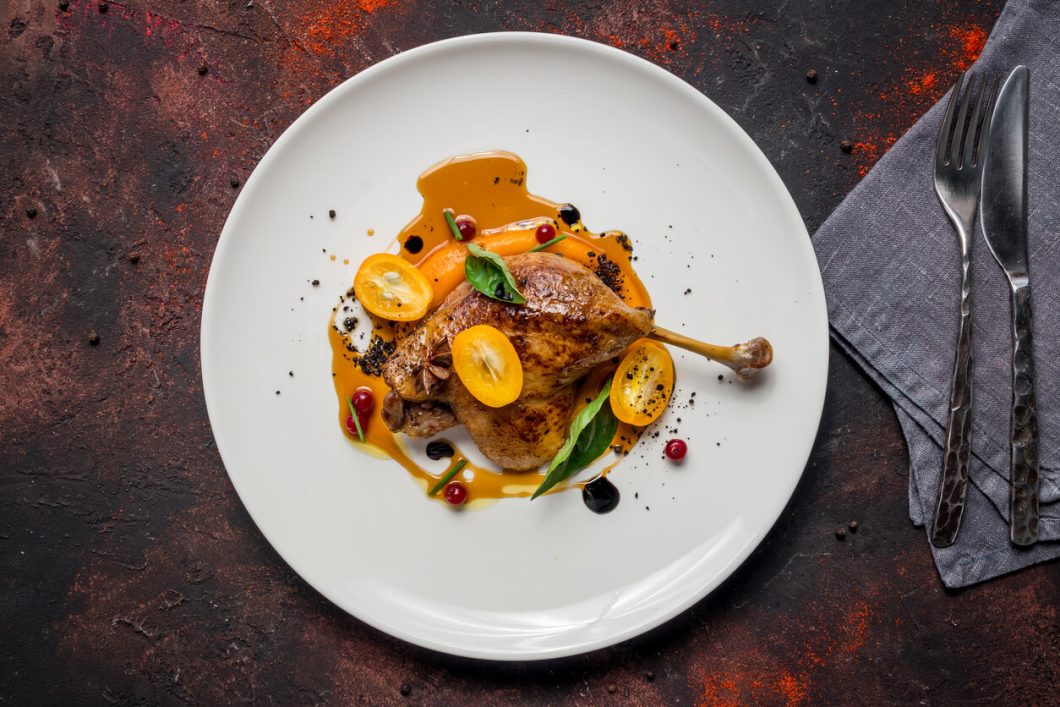
When it comes out, it doesn’t look dramatic. But then you crisp it—just enough heat to wake it back up. The skin tightens, turns golden, that first crackle when you cut into it… that’s when you understand the whole process.
Rich, yes. But not heavy in the way you expect.
There’s something clean about it, something precise. You take a bite and it’s soft, then crisp, then gone. And for a second, everything else kind of disappears.
Cure the Duck: Rub the duck legs with salt. Place them in a shallow dish with garlic, thyme, bay leaves, peppercorns, and orange zest if using. Cover and refrigerate for 24-48 hours.
Rinse and Dry: Rinse the salt and seasonings off the duck legs under cold water. Pat them dry with paper towels.
Slow Cook: Preheat your oven to 250°F (120°C). Melt the duck fat in a Dutch oven or an oven-safe pot. Once melted, add the duck legs so they are completely submerged in the fat. Place the pot in the oven and cook for 2 to 3 hours, or until the meat is very tender and almost falling off the bone.
Crisp the Skin (Optional but recommended): To serve, remove the duck from the fat and place skin-side down in a hot skillet. Cook until the skin is crispy and golden brown.
Serve: Serve hot with sides like roasted potatoes, a simple salad, or lentils.
Ingredients
Perfect Wine Pairing:
- Madiran: A full-bodied Madiran from Southwest France complements the rich, fatty flavor of the duck.
- Alternative: A robust Pinot Noir or a Grenache-based wine also pairs well, balancing fruit and acidity.