
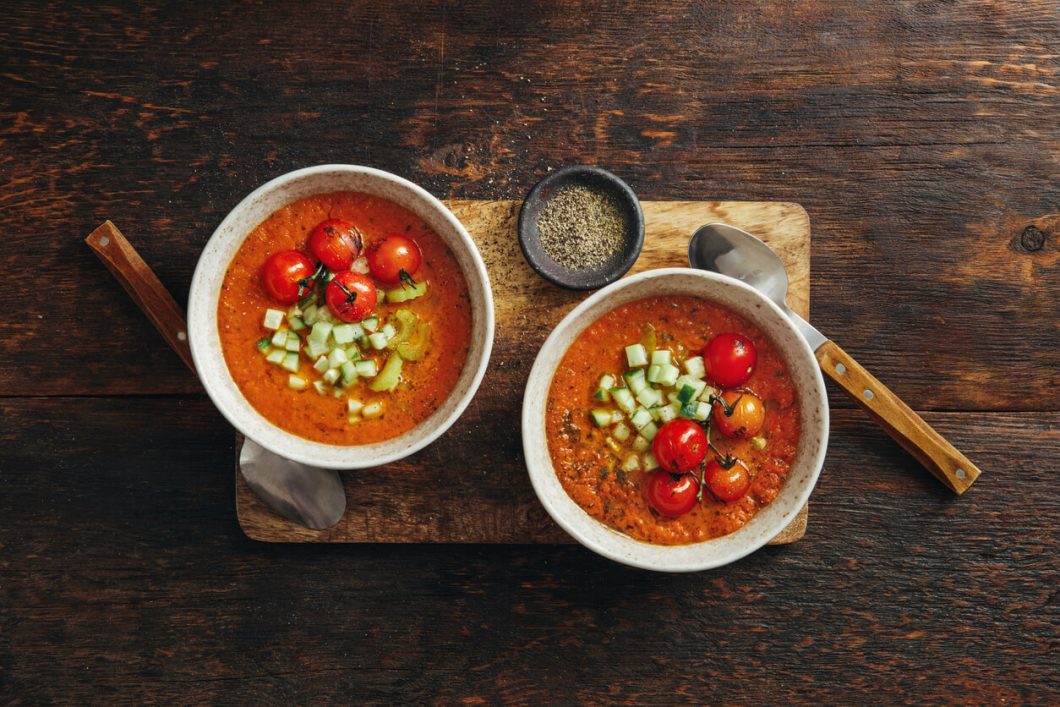
Gazpacho feels like relief before it feels like food.
There’s no heat, no slow build, no sense that something needs time to become what it is. You start with ingredients that are already there—tomatoes at their peak, cucumbers still holding that clean snap, peppers that release their scent the moment the knife touches them—and you don’t do much more than bring them together.
It’s almost instinctive.
Everything goes in without much precision. Rough cuts, a bit of garlic, olive oil, vinegar. Nothing forced, nothing overworked. And then it blends, quietly, until it turns into something smooth but still alive, something that feels fresh rather than processed.
You give it a moment.
Cold changes it. Not drastically, but enough. The flavors tighten, the edges become clearer, the sweetness of the tomatoes settles into something rounder, the acidity finding its place without pushing too far.
The first spoonful is immediate.
Cool, bright, almost sharp in the way it wakes you up. It doesn’t linger heavily, doesn’t sit on you—it moves through quickly, leaving behind that clean, refreshed feeling you didn’t realize you needed.
It’s not built to comfort in the usual sense.
But somehow, it does anyway.
Blend the Vegetables:
In a blender or food processor, combine the tomatoes, cucumber, bell pepper, red onion, and garlic. Blend until the mixture reaches your desired consistency—some prefer it smooth, while others like it a bit chunky.
Add Liquids and Season:
Transfer the blended vegetables to a large bowl. Stir in the tomato juice, red wine vinegar, and olive oil. Add sugar, salt, pepper, and hot sauce (if using) to taste.
Chill:
Cover and refrigerate the gazpacho for at least 2 hours, or until well chilled. The flavors develop more as it chills.
Serve:
Taste and adjust the seasoning before serving. Ladle the gazpacho into bowls, garnish with fresh herbs, and top with croutons.
Ingredients
Perfect Wine Pairing:
- Albariño: A Spanish Albariño, with its crisp acidity and citrus notes, pairs wonderfully with Gazpacho, complementing the dish’s freshness and acidity.