
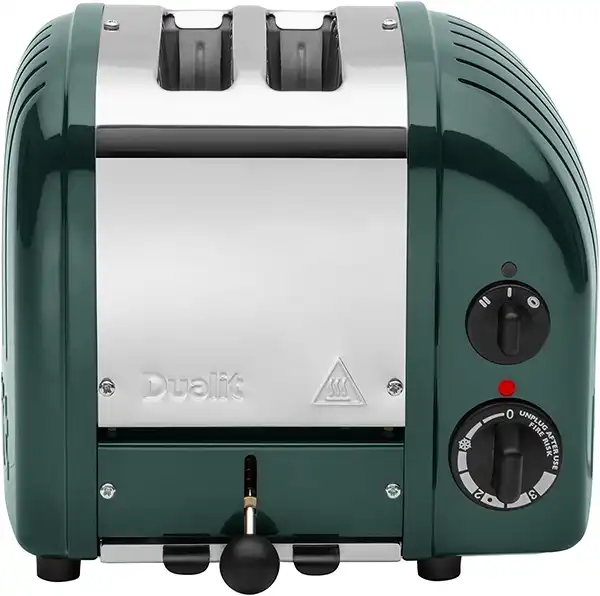
Dualit Toaster Review
An old-school machine in the best possible way — simple, durable, and built to last decades.
The Dualit toaster does not feel like a modern appliance, and that is exactly the point. From the first time you use it, it becomes clear that this is not about convenience features or digital precision. It is about control, durability, and a kind of mechanical honesty that most appliances have moved away from. There is no countdown timer, no automated system trying to predict your preferences. Instead, there is a simple dial, a manual lever, and a machine that does exactly what you tell it to do. It feels deliberate, almost slow at first, but over time it becomes something far more satisfying.
The First Time You Use It
The experience is noticeably different from modern toasters. You lower the bread manually, set the timer yourself, and wait. There is no automatic pop-up at the end of a preset cycle. Instead, the machine asks for your attention. That might feel inconvenient at first, but it quickly becomes clear that this level of control is intentional. You decide exactly how toasted you want something, not the machine.
The result is consistent, even browning that feels more controlled than most standard toasters. It may take a few tries to find your rhythm, but once you do, it becomes second nature.
Why It Feels Different
The Dualit is built around simplicity, but not in the way most appliances are. It is not simplified to reduce cost or features — it is simplified to improve durability. The internal components are designed to be replaceable, which means this is one of the few kitchen appliances that can actually be repaired instead of replaced.
That philosophy changes how you think about it. Instead of a short-term purchase, it starts to feel like something you own long-term.
Performance in Daily Use
In terms of performance, the Dualit focuses on consistency rather than speed or automation. Bread toasts evenly, bagels come out with good texture, and the slot selector allows you to control how many heating elements are active, which can make a noticeable difference when toasting smaller quantities.
It does not rush the process, and it does not try to optimize it. It simply does it well, every time.
This is not a toaster that tries to think for you — it is one that responds to you.
Living With It
The biggest adjustment is the manual nature of the machine. You need to be present when using it, which can feel unusual in a world of automated appliances. But that presence also makes the experience feel more intentional.
The build quality is where it really stands out. The metal body, the weight, and the overall construction all contribute to a sense that this is something built to last. It looks at home in both modern and classic kitchens, which is part of why it has remained popular for so long.
What We Like
- Exceptional build quality and durability
- Manual control allows precise toasting
- Repairable design extends lifespan
- Consistent and even results
- No automation or presets
- Requires attention while in use
- Higher price than standard toasters
- Not ideal for those seeking convenience
Who This Toaster Is Really For
The Dualit is for someone who values durability and control over convenience. It suits kitchens where design, longevity, and craftsmanship matter. It is also ideal for people who prefer tools that they can understand and rely on, rather than ones that try to automate everything.
Our Verdict
The Dualit toaster stands out because it refuses to follow modern appliance trends. It does not prioritize convenience or features. Instead, it focuses on durability, control, and consistency — and it delivers on all three.
It is not for everyone, but for the right buyer, it offers something that most appliances do not: longevity and reliability that feel intentional rather than incidental.
If you want a toaster that feels like a long-term investment rather than a disposable appliance, the Dualit is one of the best choices available.