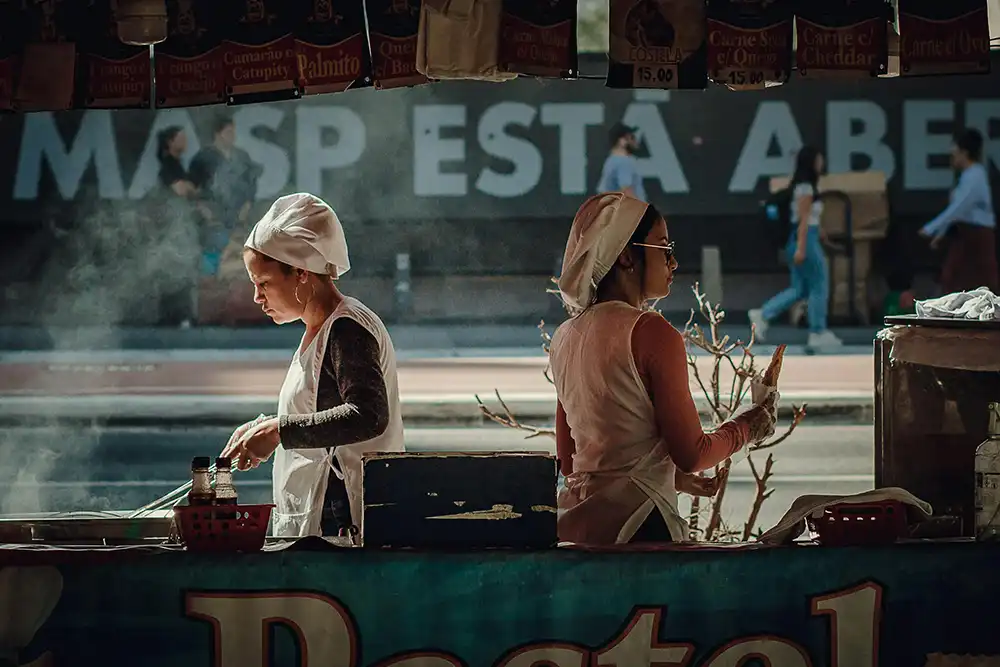
Brazil doesn’t serve food quietly. It arrives with warmth, movement, and a kind of generosity that you feel before you even take a bite. There’s always something happening around it—the sound of oil cracking in the background, the smell of grilled meat drifting through the air, the quiet rhythm of people gathering without needing a reason. That’s what makes Brazilian cuisine so compelling. It’s not just about what’s on the plate, it’s about everything that surrounds it.
What I love most is how naturally it moves between moments. One second you’re holding something small, crisp, and freshly fried, the next you’re sitting down to a slow, comforting meal that feels like it’s been building all day. There’s no strict structure to it. Just instinct, culture, and a deep understanding that food is meant to be shared.
Take pão de queijo, for example. It’s one of the simplest things you can make, but somehow it never feels basic. Warm, slightly chewy, filled with melted cheese, it’s the kind of bite that belongs everywhere—next to coffee in the morning, on a table with friends, or eaten standing in the kitchen before anyone else gets to it. It doesn’t try to impress you, and that’s exactly why it does.
Then there’s coxinha, which feels like the complete opposite in energy. Crisp, golden, filled with creamy shredded chicken, it’s impossible to eat without a little bit of joy. It’s playful, a little indulgent, and completely addictive. You see it everywhere in Brazil—bakeries, bars, parties—and once you understand it, you realize it’s not just a snack, it’s part of the rhythm of the place.
If you shift into something softer, more delicate, empadinhas de palmito take you in a different direction. Buttery pastry, a creamy hearts of palm filling, subtle flavors that don’t rush you. They feel quieter, more refined, but still deeply comforting. The kind of thing you reach for slowly, not because you’re starving, but because it’s just… right.
And then everything slows down completely with feijoada. This is not a quick meal. It’s rich, layered, and meant to be eaten over time. Beans, meats, sides that balance everything out—it’s one of those dishes that pulls people to the table and keeps them there. You don’t rush feijoada. You let it happen.
On the other side of that experience, you have churrasco, which feels more like an event than a recipe. Fire, meat, conversation, time—it all blends together. You don’t just cook churrasco, you stand around it, you wait, you talk, you eat in moments. It’s simple, but it’s powerful.
That’s really what ties all these Brazilian recipes together. They don’t exist in isolation. They live in moments—fast ones, slow ones, loud ones, quiet ones. Some are eaten on the street, some at the table, some straight from the grill while you’re still standing nearby.
And somewhere in between all of that, you realize something important: Brazilian food isn’t trying to be perfect. It’s trying to be shared.
That’s why it stays with you.