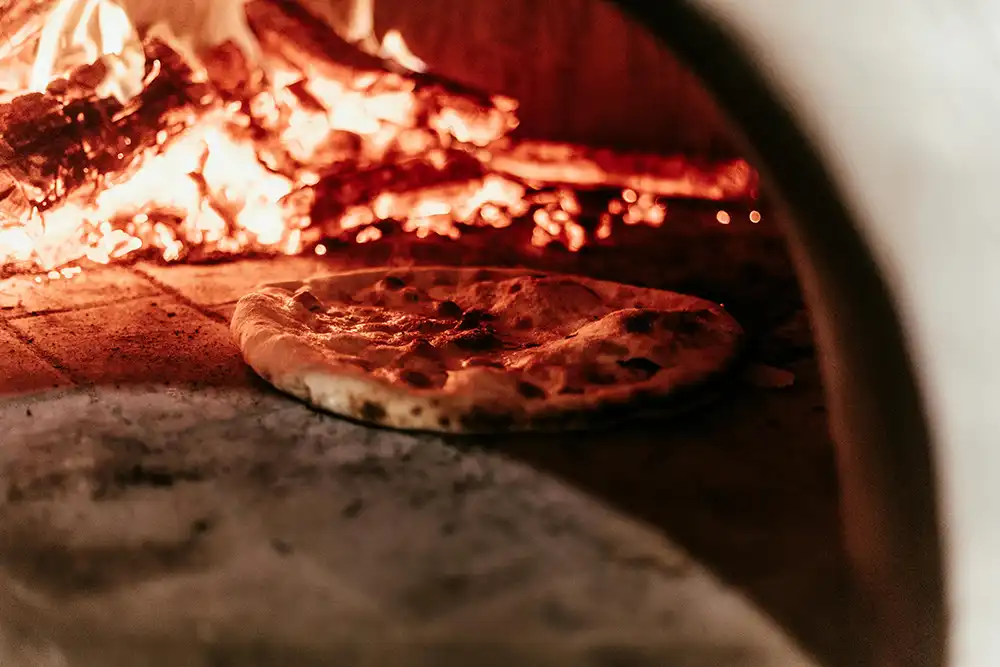
There’s something about pizza that never really leaves you. It starts simple, just dough, tomato, cheese, but the more you pay attention, the more you realize how much is happening. Texture, heat, balance, timing. The way a crust lifts, the way ingredients settle into place.
Italian pizza doesn’t try to be everything at once. Each version chooses its direction and commits to it. That’s what makes it so easy to come back to, and why one pizza never feels like enough.
It usually begins with something as pure as Pizza Margherita, where nothing hides behind anything else. Tomato, mozzarella, basil, every detail shows. When it’s done right, it feels clean and complete, almost effortless, even though it never really is.
Then there’s the comfort of Pizza Prosciutto e Funghi, a combination that just makes sense once it hits the table (recipe here). The mushrooms bring depth, the prosciutto adds that gentle saltiness, and everything melts together in a way that feels familiar from the first bite.
Some pizzas lean into abundance, and Pizza Capricciosa does it without hesitation. Artichokes, mushrooms, olives, ham, a bit of everything, yet it never feels overwhelming. Each bite shifts slightly, and that’s what keeps it interesting all the way through (see the recipe).
If you’re looking for something with a bit more edge, Pizza Diavola brings it. The heat builds slowly, carried by spicy salami and just enough chili to keep things alive without taking over. It’s bold, but still controlled in a way that makes you go back for another slice (full recipe).
On the other side, Pizza Quattro Formaggi takes a softer approach. No sharp contrast, no acidity to cut through, just layers of cheese melting into something smooth and rich. It’s indulgent, but it never feels out of control (explore it here).
Then you find something quieter, like Pizza Bianca al Tartufo, where everything slows down. No tomato, just creaminess and that deep truffle aroma that builds gently as it warms. It’s subtle, but it stays with you long after the last bite (recipe).
Some combinations feel a little unexpected at first, like Pizza Pesto e Gamberi, but they settle quickly into something that just works. The pesto carries everything, while the shrimp stay light and clean, giving the pizza a freshness that feels almost coastal (see how it’s made).
And then there are pizzas that don’t try to please everyone, like Pizza Salsiccia e Friarielli. Slightly bitter, rich, and deeply rooted in Naples, it has a very specific character. It doesn’t soften itself, and that’s exactly why it works (full recipe).
What connects all of these Italian pizza recipes isn’t a single ingredient or technique. It’s the approach. You keep things simple, you respect the ingredients, and you let everything come together naturally instead of forcing it.
And once you start cooking like that, pizza stops being just something you order.
It becomes something you understand.