
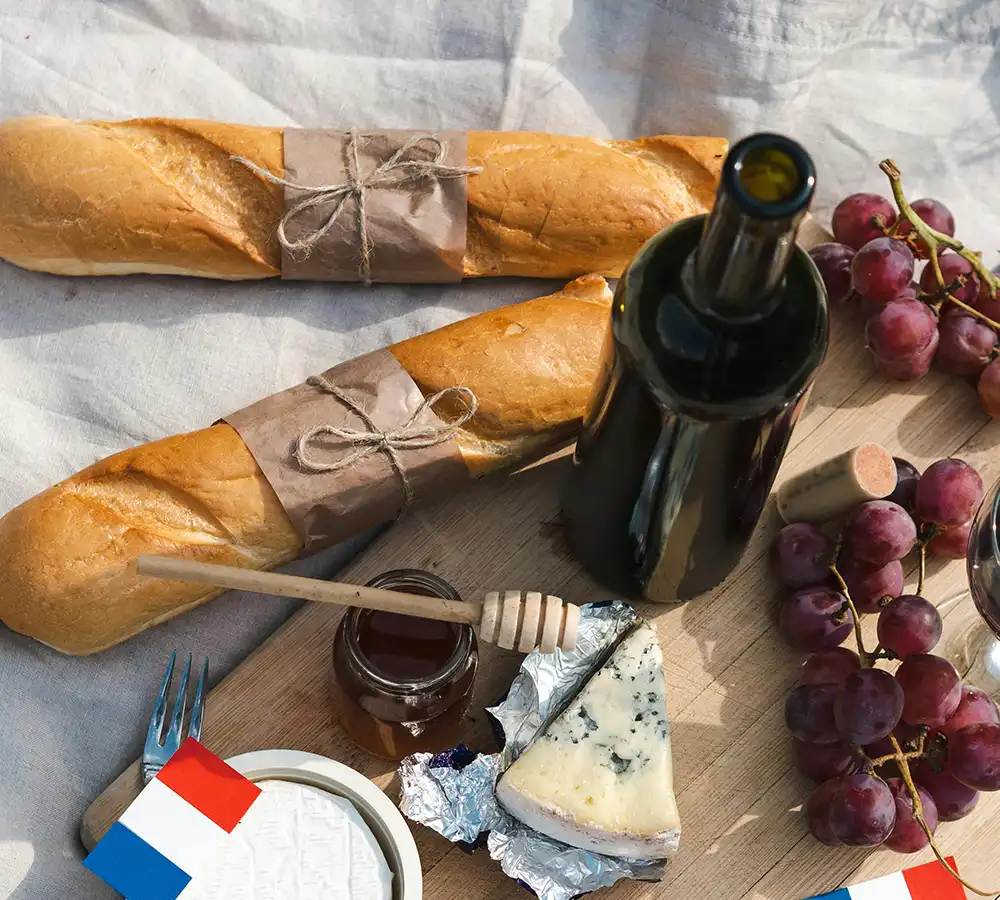
In France, a meal doesn’t really begin with the first course.
It begins earlier than that, in the quiet space before everything settles. A glass poured, something small placed on the table without much explanation, a bite taken almost absentmindedly that turns into another. There’s no rush to get anywhere. The beginning is allowed to take its time.
That’s where French appetizers live.
Not as something separate from the meal, but as part of its rhythm. A way of easing into it, of letting flavors open gradually rather than all at once. Sometimes light, sometimes rich, sometimes somewhere in between, but always intentional in a way that doesn’t feel forced.
You might start with something warm, something that feels almost effortless—like gougères. They arrive puffed and golden, still warm enough that the cheese feels like it’s part of the air inside them. Crisp at the edges, soft the second you bite in, they disappear quickly, often without anyone really noticing how many they’ve had. They’re not meant to be plated carefully. They’re meant to be shared, passed around, eaten in that quiet, unstructured way that defines the beginning of a French meal.
From there, things can shift without warning.
Something more delicate might follow, like a cheese soufflé. It doesn’t sit still for long. It rises, holds for a moment, then begins to fall, and you’re expected to meet it exactly where it is. You don’t wait, you don’t hesitate—you take that first spoonful while it’s still light, still warm, still holding onto that fragile structure. It’s not just about flavor. It’s about timing, about catching something at its peak before it changes.
And then, just as easily, everything slows again.
A dish like ratatouille doesn’t demand attention. It settles into the table. Vegetables softened over time, coming together gradually, not losing themselves but finding a balance that feels natural rather than constructed. It carries a different kind of depth—one that comes from patience rather than precision.
There’s a quiet shift that happens here.
The table becomes more comfortable. The pace slows. What started as a small bite turns into something more grounded, something that invites you to stay a little longer.
That’s where dishes like rillettes find their place.
They don’t try to impress. There’s nothing polished about them. Just meat that’s been given time—slow-cooked until it softens completely, then brought back together into something rich, something that spreads easily onto bread without resistance. It’s not refined in the traditional sense, but it carries something deeper. A kind of honesty that doesn’t need to be explained.
You spread it, maybe more than you intended, and without realizing it, you’ve settled into the meal.
Somewhere alongside this, there are dishes that sit between comfort and intention.
Tarts, galettes, preparations that don’t try to be perfect. Tarte aux Champignons, for example, feels like it belongs to a quieter moment. Mushrooms cooked slowly until they deepen, folded into something soft, held together by a crust that does its job without ever taking focus. It’s the kind of dish that doesn’t need to be explained—it just works.
And that’s really what defines French appetizers.
They don’t follow a single direction. They move.
From something light and airy to something rich and grounded. From something that disappears in seconds to something that lingers. From precision to instinct. And in that movement, they create space—not just for what comes next, but for the experience itself.
You notice it in the way people eat.
At first, there’s a bit of hesitation. Then comfort. Then that moment where everything settles and the table becomes less about the food and more about the rhythm around it. The conversation stretches, the pace slows, and the meal begins to take shape without anyone needing to guide it.
That’s the role of the appetizer.
Not to define the meal, but to open it. To create that shift where everything else becomes possible.
Sometimes it’s something warm and quick, like gougères, gone before you’ve really noticed. Sometimes it’s something delicate that asks for attention, like a soufflé that won’t wait. Other times it’s something slow and grounding, like ratatouille or rillettes, dishes that carry time in them.
There’s no single way to begin.
Only the way that feels right in that moment.
And once it starts, once that first plate is set down and the rhythm takes hold, everything else follows naturally.