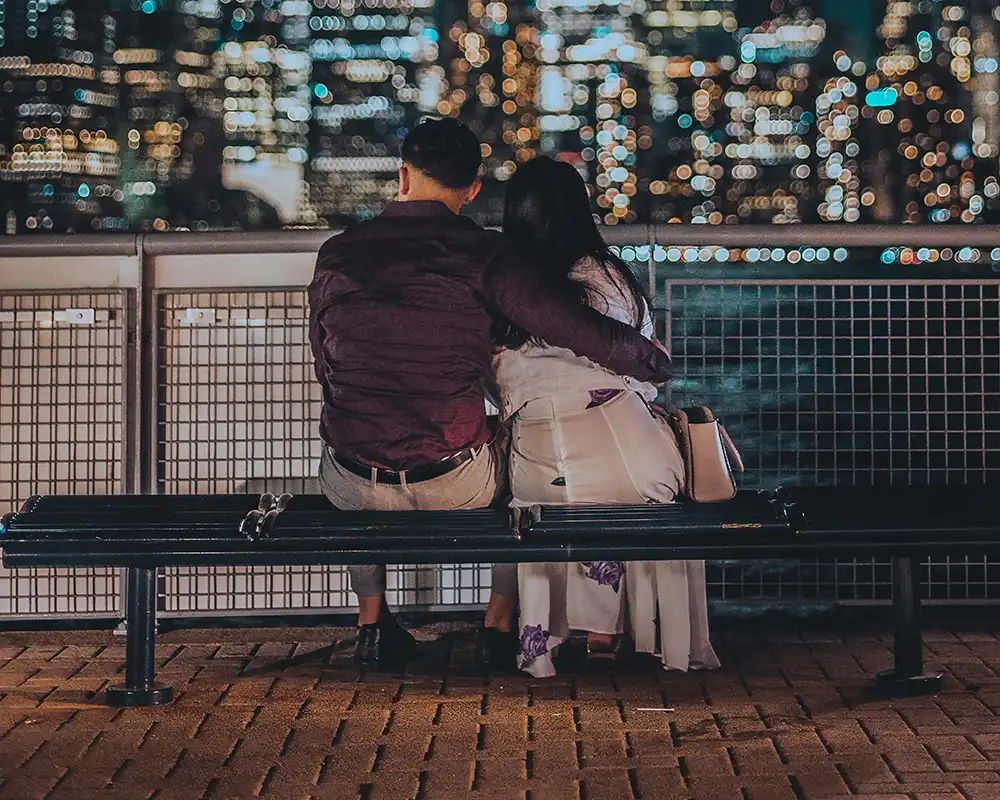
There’s a particular moment in New York that only happens at night, usually somewhere between the first glass of wine and the second course. The city is still moving outside — taxis cutting through intersections, people passing quickly under streetlights — but at the table, something slows. Conversation settles. The room begins to take shape around you. What felt like noise becomes atmosphere, and what felt like a restaurant becomes something more personal.
That moment is what defines a romantic restaurant in New York. Not candlelight, not white tablecloths, not even the food itself. It’s the shift — subtle, almost unnoticeable — where the outside world fades just enough to let the evening take over.
Some places are built entirely around that feeling. Others arrive at it almost by accident.
At Frevo, it begins before you even realize it. You step into what appears to be a small art gallery in Greenwich Village, pausing just slightly as you try to understand where the restaurant actually is. There’s no immediate reveal, no host stand announcing your arrival. Instead, there’s a moment of uncertainty — and then a quiet transition as the hidden door opens and the dining room appears.
That transition matters. It changes your pace. It sharpens your attention. By the time you are seated at the counter, the city has already started to dissolve behind you.
Inside, the experience is defined by proximity. A handful of seats face directly into the kitchen, where each movement becomes part of the evening. The tasting menu unfolds with precision, but never feels staged. There is no distance between you and what is happening, and that closeness creates a kind of intimacy that feels almost private, even in a shared space.
Where Frevo removes you from the city, Raoul’s does the opposite.
The room is already in motion when you arrive. Tables are packed tightly together, the lighting is low but alive, and the entire space carries a constant rhythm that never quite settles. It is not quiet, not controlled, and not particularly concerned with creating a traditional sense of romance.
And yet, that is exactly why it works.
There is something about the density of the room — the way conversations overlap, the way service moves quickly through narrow spaces — that creates its own kind of closeness. You are not separated from the environment; you are part of it. The steak au poivre arrives with the same confidence it has carried for years, the bar fills quickly, and the evening begins to move on its own terms.
Romance here is not constructed. It emerges.
If Raoul’s is built on movement, Gramercy Tavern is built on something quieter and far more enduring.
From the moment you walk in, there is a sense of familiarity that settles into the room. It is not dramatic or immediate, but gradual — the kind of feeling that builds over the course of the evening. The lighting is soft but clear, the space open without feeling exposed, and the service moves with a kind of confidence that never calls attention to itself.
This is where the city softens.
The menu follows that same rhythm, shaped by the seasons but anchored in consistency. Dishes arrive without unnecessary complexity, allowing the ingredients to lead. There is no need for surprise here. The experience works because it is grounded, dependable, and deeply comfortable.
Romance at Gramercy Tavern does not rely on tension or contrast. It comes from ease — from the feeling that everything is exactly where it should be.
There are nights, though, that call for something more precise. More composed. More intentional.
That is where The Modern becomes part of the conversation.
Overlooking the sculpture garden at the Museum of Modern Art, the dining room feels almost architectural in its design. Lines are clean, spacing is deliberate, and light moves through the room in a way that feels controlled rather than atmospheric. It does not try to create intimacy through closeness. Instead, it creates it through clarity.
Everything here is measured.
The kitchen reflects that same approach. Each dish is structured with precision, flavors layered carefully, presentations clean and exact. The two Michelin stars feel less like a distinction and more like a natural extension of the experience itself.
What makes it romantic is not softness, but alignment. The room, the food, the pacing — everything moves together, creating an evening that feels composed from start to finish.
And then, just when you think the definition of romance in New York has settled into something clear, Le Jardinier shifts it again.
The room is lighter. Softer. More open.
There is no attempt to create drama here. Instead, the focus is on balance — in the space, in the lighting, in the food itself. The atmosphere feels calm, almost quiet, even in the middle of Midtown. It is a restaurant that allows the evening to breathe.
That sense of lightness carries through the menu, where vegetables take a central role, shaping dishes that feel clean and precise. Even richer plates are structured to maintain that balance, allowing the meal to move forward without weight.
What emerges is a different kind of romantic experience — one that feels modern, composed, and free from excess.
Taken together, these restaurants do not define a single version of romance in New York. They reveal how many versions can exist at once.
A hidden room that feels like a secret.
A crowded dining room where energy becomes intimacy.
A space built on warmth and familiarity.
A restaurant shaped by precision and light.
An experience defined by balance and restraint.
Each offers a different way to arrive at the same moment — that quiet shift where the city falls away, and the evening begins to belong entirely to you.