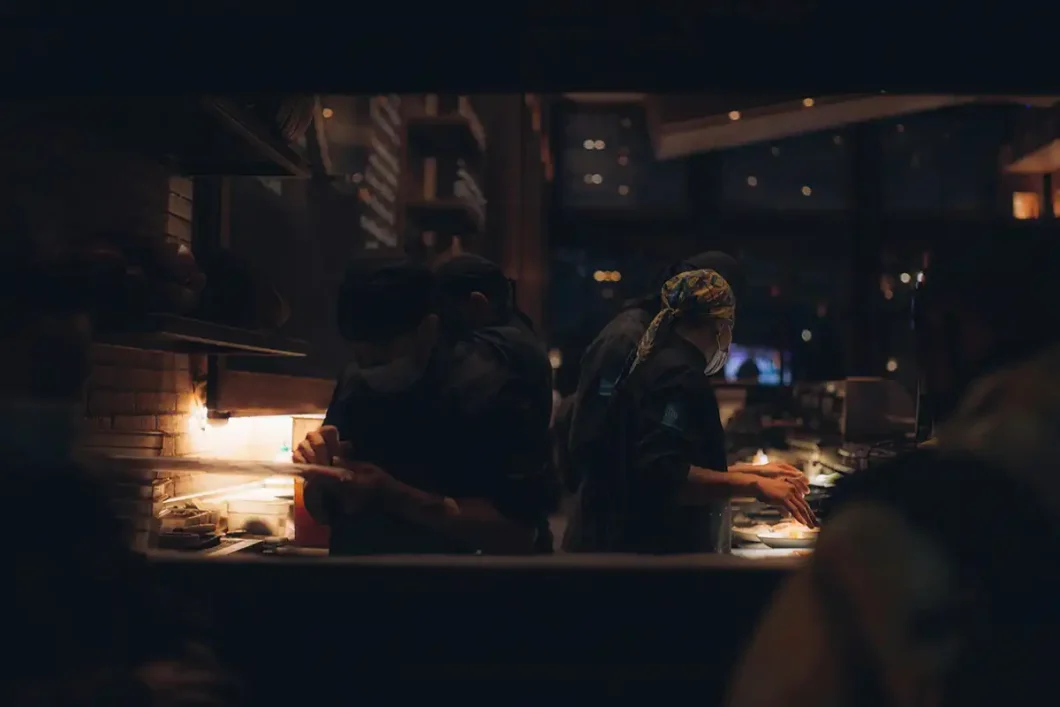
There is a moment, usually somewhere between your third and fourth restaurant in New York, when the city stops feeling infinite and starts feeling repetitive. Not because it is — New York never really runs out — but because the surface layer becomes easier to navigate than what sits underneath it. Reservations start to follow patterns. Lists begin to overlap. You realize you’re circling the same names, the same rooms, the same version of what dining in New York is supposed to be.
And then, occasionally, you step slightly off that path.
Not far. Just enough.
A smaller room. A quieter street. A restaurant that doesn’t announce itself the same way, doesn’t compete for attention with the same urgency. And suddenly the experience shifts. It feels less like you’re following a recommendation and more like you’ve arrived somewhere on your own.
That’s where New York becomes interesting again.
Hidden gems aren’t necessarily hidden in the literal sense. They exist in plain sight. They’re booked, reviewed, respected. But they sit just outside the main current — not pushed by hype, not defined by algorithms, not constantly circulating through the same conversation. They are places you remember differently. Not because they were louder, but because they felt more personal.
The restaurants in this guide exist in that space.
It’s easiest to begin downtown, where the idea of discovery still feels closest to the surface. In Nolita, behind a façade that doesn’t demand attention, The Musket Room continues to operate with a kind of quiet confidence that has outlasted trends, chefs, and shifting expectations. The room is warm, almost understated, and that warmth changes the way the meal unfolds. What makes it linger, though, isn’t the structure — it’s the feeling. The way the meal progresses without pressure. The way the cooking reveals itself gradually, not all at once. It doesn’t try to impress immediately. It builds. And by the end, you’re left with the sense that you’ve experienced something more thoughtful than most of what surrounds it. That’s often the first signal of a hidden gem: not that it’s better in obvious ways, but that it stays with you longer than expected.
A few blocks away, the rhythm shifts again. Loring Place doesn’t rely on surprise or complexity to define itself. Instead, it follows something quieter — seasonality, restraint, and a kind of cooking that feels grounded rather than constructed. The effect is subtle but powerful. The menu changes, but the identity remains intact. Vegetables take the lead without becoming a statement. Dishes arrive without excess, but never feel minimal. It’s the kind of place where you don’t remember a single plate as much as you remember how the entire meal felt — balanced, clear, and complete. In a city that often rewards intensity, Loring Place succeeds through calm.
Then there are the restaurants that exist almost in contrast to everything around them. On the Lower East Side, Foxface Natural feels like stepping into a different conversation entirely. It’s newer, more experimental, and far less concerned with fitting into a recognizable category. The menu leans into wild game and unconventional ingredients, but what makes it compelling isn’t just the ingredients — it’s the control behind them. The dishes are structured, deliberate, and surprisingly composed for something that could easily become chaotic in less careful hands. It’s a restaurant that asks something of the diner: attention, curiosity, a willingness to move outside the familiar. And in return, it offers something rare — a sense that you are experiencing something genuinely new.
Across the river, in Fort Greene, the tone softens again. LaRina Pastificio & Vino doesn’t try to redefine anything. It doesn’t need to. The room is warm, the lighting is low, and the pace feels slightly removed from the rest of the city. It’s the kind of place where the table settles before the meal even begins. What makes LaRina memorable isn’t innovation — it’s care. Handmade pasta that feels precise without losing its comfort. Plates that arrive without urgency. A rhythm that encourages you to stay longer than planned. It belongs to that category of restaurant that becomes part of your personal map of the city — not because it’s the most ambitious, but because it’s the one you return to when you want something to feel right.
And then there are the places where precision becomes the defining characteristic. In Tribeca, Shion 69 Leonard Street offers an experience that feels almost removed from the rest of New York entirely. The room is minimal, the pacing deliberate, the focus absolute. Everything here is reduced to essentials. The balance between rice and fish. The timing of each piece. The quiet progression of the meal. It’s less about variety and more about refinement — about doing fewer things, better. For diners who understand that the best experiences are often the quietest ones, it becomes one of the most rewarding tables in the city.
Taken together, these restaurants don’t define a single style of dining. They move across cuisines, neighborhoods, and philosophies. What connects them is something less visible but more important.
They don’t chase attention.
They don’t position themselves as destinations in the way many restaurants do. Instead, they exist slightly outside that system — not hidden, but not fully absorbed into it either. They are places that reveal themselves gradually, often through repetition, through recommendation, through the kind of discovery that feels earned rather than given.
That’s what makes them memorable.
New York will always have its headline restaurants. The ones you plan around, book weeks in advance, and experience as part of a larger narrative about the city. Those places matter. They define the top layer of dining here.
But the restaurants you return to — the ones that become part of your own version of New York — tend to look more like these.
A dining room in Nolita that feels warmer than expected.
A Village restaurant where vegetables quietly take center stage.
A Lower East Side kitchen that refuses to follow convention.
A Brooklyn pasta spot that slows everything down.
A Tribeca counter where precision becomes the entire experience.
They don’t compete with each other. They don’t need to. Each one occupies its own space, its own rhythm, its own way of being discovered.
The real shift happens when you stop asking what the “best” restaurant in New York is and start asking something else.
Where would you go back without thinking?
Where would you send someone who already knows the obvious answers?
Where does the city still feel like it’s unfolding, rather than repeating itself?
That’s where hidden gems live.
Not at the edges, but just beneath the surface — waiting for the moment when you decide to look a little differently.