Travel through Italy long enough and you begin to understand that pasta is more than food — it is geography, memory, and identity shaped by flour and time. Each region writes its story in dough, revealing a country best understood not by maps, but by meals.
A Country Written in Dough
Italy reveals itself slowly to those who travel through it, but nowhere more honestly than at the table. Long before dialects shift or landscapes change dramatically, pasta begins to transform — subtly at first, then unmistakably. Shapes lengthen or shrink, sauces grow richer or lighter, and ingredients respond quietly to climate, history, and necessity.
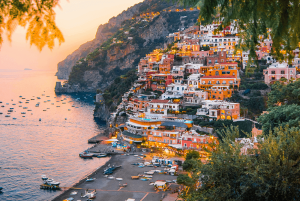
In the north, butter softens sauces shaped by colder winters. Moving south, olive oil replaces cream, tomatoes deepen beneath stronger sunlight, and pasta dries naturally in warm coastal air. By the time the journey reaches Sicily, dishes carry echoes of trade routes that once connected Europe, Africa, and the Middle East.
Italy’s geography is not simply seen; it is eaten.
Pasta becomes a map — one telling stories of farmers, sailors, aristocrats, and grandmothers who preserved tradition through repetition rather than documentation. Each region protects identity not through borders but through recipes passed quietly across generations. To travel through Italy is to move from one pasta philosophy to another.
The Landscape Shapes the Plate
Unlike cuisines built around national uniformity, Italian cooking developed regionally for centuries before political unification. Mountains isolated communities, fertile plains encouraged agriculture, and coastal access introduced foreign influences that reshaped local cooking. The result is not one Italian cuisine but many, connected by shared principles rather than identical dishes.
Northern Italy: Comfort and Precision
In Emilia-Romagna and Lombardy, fertile farmland supported dairy production and wheat cultivation. Eggs enriched pasta dough, producing delicate sheets rolled thin enough to capture sauce without overwhelming it. Tagliatelle, tortellini, and lasagne reflect patience and technical refinement shaped by colder climates.
Ragù simmers slowly, built layer by layer rather than rushed. Butter and Parmigiano-Reggiano create warmth and structure, giving meals a sense of quiet architecture.
Central Italy: Simplicity Perfected
Rome and its surrounding regions embrace restraint. Here, pasta demonstrates that mastery often lies in limitation. Cacio e pepe relies on only cheese and pepper; carbonara transforms eggs, guanciale, and pecorino into something unexpectedly complex.
Technique replaces excess. Timing becomes everything.
Central Italian cooking teaches that simplicity demands precision, rewarding attention rather than decoration.
Southern Italy: Sun and Abundance
Further south, durum wheat thrives in dry conditions, encouraging dried pasta traditions. Shapes like orecchiette, rigatoni, and spaghetti pair naturally with tomato sauces brightened by olive oil and sunlight. Cooking feels expressive rather than restrained, reflecting agricultural abundance and Mediterranean influence.
The rhythm of the south feels generous and open, shaped by outdoor life and communal meals shared late into warm evenings.
Pasta as Daily Ritual
Across Italy, pasta occupies a unique space: neither special-occasion luxury nor casual convenience. It exists comfortably between celebration and routine. Lunch tables fill with families sharing bowls meant for passing rather than individual plating, while restaurants present pasta as a primo — a course designed to prepare appetite rather than conclude it.
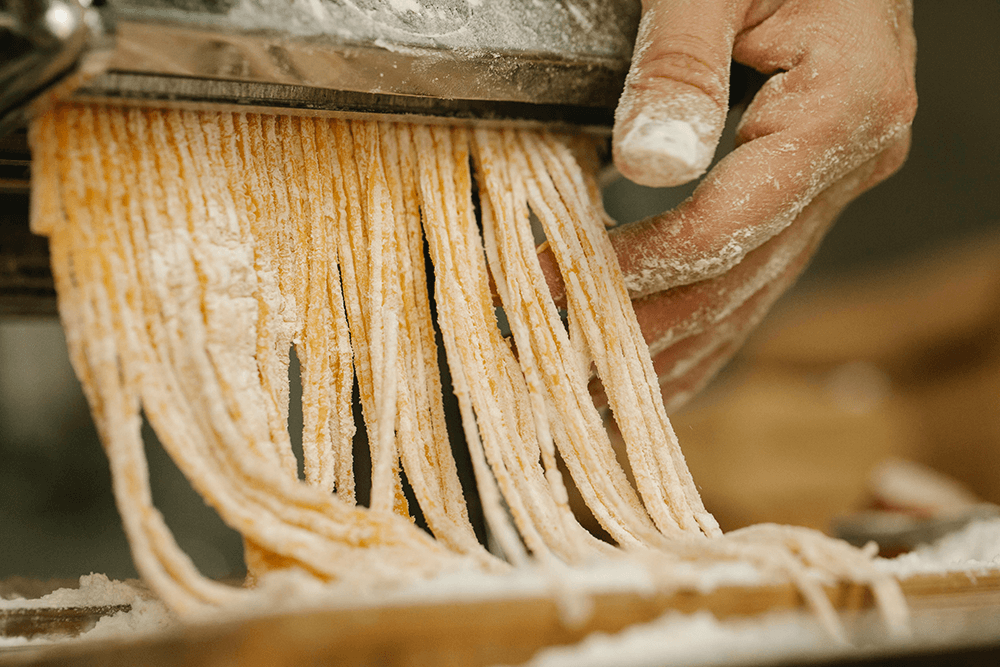
Preparation itself becomes ritual. Flour forms a mound on wooden boards, eggs are incorporated slowly, and hands guide dough into elasticity learned through repetition rather than measurement. Even dried pasta carries respect, cooked carefully and finished directly in sauce to achieve harmony.
Cooking pasta properly is considered an act of care.
The Intelligence of Shape
One of Italy’s most remarkable culinary insights lies in understanding that shape determines experience. Pasta is engineered for sauce interaction. Long strands wrap around silky sauces, tubes capture ragù within hollow centers, twists hold pesto between grooves, and small shapes integrate seamlessly into soups.
This relationship between form and flavor transforms eating into design. Choosing the wrong pasta rarely breaks a rule — it simply disrupts balance. Italians rarely explain this formally; knowledge develops naturally through exposure.
Tradition persists because it works.
What Travelers Discover First
Visitors often arrive expecting extravagance yet encounter restraint instead. Dishes appear simple, sometimes surprisingly so. Garnishes remain minimal, portions moderate, ingredients few. The revelation arrives with the first bite.
Flavor emerges from clarity rather than complexity. Tomatoes taste intensely of themselves, cheese adds depth without heaviness, and pasta retains firmness — al dente — creating texture unfamiliar to those accustomed to softer preparations.
Dining customs also surprise newcomers. Pasta rarely accompanies meat, cheese seldom meets seafood, and cappuccino quietly disappears after morning hours. These practices are not rigid rules but expressions of harmony developed across centuries.
Italian cuisine prioritizes balance over personalization.
Markets, Grandmothers, and Memory
The persistence of pasta traditions owes less to restaurants than to homes. Markets guide cooking decisions daily, steering families toward seasonal ingredients rather than fixed menus. Grandmothers — nonne — remain central figures in culinary continuity, passing knowledge through gesture rather than instruction.
Measurement exists in instinct: a handful of flour, a moment of kneading, a visual cue signaling readiness. Recipes live in memory rather than documentation, allowing variation to become personal signature rather than deviation.
Food becomes biography.
Bringing Italy Home
The lessons of Italian pasta culture translate surprisingly well beyond Italy. The philosophy emphasizes attention rather than perfection. Small adjustments reshape meals immediately, allowing even weeknight cooking to feel intentional.
Cook pasta the Italian way:
- Salt water generously so pasta carries flavor internally
- Reserve cooking water to bind sauce naturally
- Finish pasta in the pan rather than plating separately
- Prioritize ingredient quality over quantity
Recipes that capture regional spirit:
- Tagliatelle al Ragù (Emilia-Romagna)
- Cacio e Pepe (Rome)
- Orecchiette with Broccoli Rabe (Puglia)
- Spaghetti al Pomodoro (Southern Italy)
Travel Notes: Experiencing Pasta Across Italy
Where to Experience Regional Pasta
- Bologna for handmade egg pasta
- Rome for minimalist classics
- Naples for tomato simplicity
- Bari for street-side orecchiette makers
What to Observe
- Pasta served as a separate course
- Limited menu substitutions
- Seasonal variations
Dining Etiquette
- Avoid over-customizing dishes
- Trust regional specialties
- Appreciate pacing between courses
THE OVENSOURCE PERSPECTIVE
Italy teaches that food culture thrives when tradition evolves slowly. Pasta endures not because it resists change, but because it adapts carefully while preserving identity. Travelers often try to recreate flavors at home, only to realize the deeper lesson lies elsewhere.
Italian pasta is defined not only by ingredients or technique, but by attention — to place, to season, and to those gathered around the table.
In understanding pasta, one begins to understand Italy itself: diverse yet unified, simple yet deeply layered, shaped by time as much as taste.