
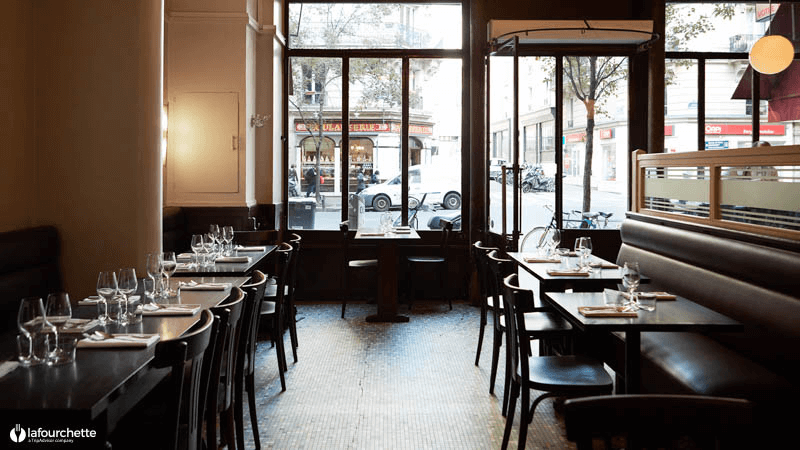
Le Chateaubriand is one of those Paris restaurants that gets spoken about like a before-and-after moment. Not because it’s ornate, not because it’s a “scene,” and definitely not because it’s trying to charm you with luxury. It’s the opposite: a small, energetic room in the 11th that helped define what the modern neo-bistro era would feel like—casual on the surface, deeply intentional underneath, and driven by instinct rather than formality. You come here because you want to feel Paris cooking in real time: seasonal, slightly unpredictable, and confident enough to be imperfect in a way that still tastes exactly right.
- Address129 Avenue Parmentier, 75011 Paris
- Neighborhood11th (Folie-Méricourt)
- CuisineModern French neo-bistro (set menu)
- VibeMinimal, lively, deliberately unfussy
- Best ForAdventurous diners, modern Paris dining culture
- ReservationsRecommended / limited seats
The Neo-Bistro Energy, Before It Became a Genre
There’s a particular kind of restaurant that only makes sense in Paris: the one that looks simple until you realize how much discipline it takes to keep it that way. Le Chateaubriand has long carried that “origin story” energy—like a place that helped loosen the city’s collar without losing respect for technique. The room is stripped back and busy, the tables feel close enough that you catch the pulse of the whole restaurant, and the mood is more bistro-night than white-tablecloth ritual. Yet the cooking is ambitious, which is exactly where the neo-bistro idea lives: serious talent working inside an environment that refuses to perform seriousness. When you walk in, it doesn’t feel like you’ve entered a temple. It feels like you’ve entered a packed, confident dining room where the kitchen is allowed to be creative without wrapping that creativity in ceremony. That’s the charm, and it’s also the point—Le Chateaubriand helped show that “great” could be relaxed, that a tasting menu could feel like a night out rather than an examination, and that modern Paris could be both playful and deeply skilled at the same time.
It’s not a restaurant that asks you to admire it. It asks you to trust it.
What the Meal Feels Like in Real Life
Le Chateaubriand is best understood as a current rather than a checklist. Most nights revolve around a set menu that changes often, and the experience has the momentum of a kitchen that wants to keep moving forward. Courses arrive in a steady rhythm—sometimes bright and clean, sometimes rich and layered, often surprising in the way flavors are paired—but almost always with a sense of direction. You’ll notice how the meal balances tension: acidity against warmth, crunch against softness, sweetness used sparingly as a contrast rather than a finish-line. It’s the kind of dinner where the “story” isn’t written in grand gestures; it’s written in decisions—how a sauce is sharpened, how a garnish isn’t decorative but functional, how one dish seems to set up the next without you noticing the handoff. The room itself contributes to that feeling. It’s alive, often loud, and it keeps you in the present. There’s no drifting into silence here. You’re in Paris, in the 11th, at a table that feels plugged into the city’s modern dining bloodstream, and the experience works because it doesn’t pretend to be something else.
The Set Menu Philosophy
Set menus can sometimes feel restrictive, but at Le Chateaubriand the format reads more like a statement of intent: this is a place where the kitchen wants to speak in full sentences, not sound bites. The menu changes because that’s how the restaurant stays honest. The cooking follows what’s available and what’s exciting right now, rather than what’s always safe, and that creates a certain electricity for diners who enjoy being guided. It’s important to come with the right expectation: you’re not choosing your own adventure, you’re letting the chef draw the map for the evening. That’s why the restaurant has such a loyal following among people who care about modern Paris dining. You get to see a kitchen thinking out loud—refining, testing, balancing—without the stiffness that often comes with “serious” tasting experiences. And because the room is casual, it never feels like a lecture. It feels like a night where the kitchen is simply better at making decisions than you are, and you’re happy to let that be true for two hours.
To Try
Because the menu changes constantly, the best “to try” advice here is really “how to lean in.” These three moves will help you get the Le Chateaubriand experience you came for, without turning the meal into a puzzle you’re trying to solve.
Commit fully to the set menu — Don’t fight the format. This restaurant is built around trust, pacing, and contrast. Let the kitchen run the night, and you’ll understand why this place became such a reference point for the neo-bistro era.
Say yes to the bright, seasonal courses — The most memorable neo-bistro cooking often lives in freshness: vegetables handled like the main event, seafood courses that lean clean rather than heavy, sauces that taste like they were reduced forever but finished with a sharp lift. These plates tend to show the restaurant’s clearest voice.
Let wine support the energy — Whether you go with a pairing or ask for a bottle that matches the room, lean toward wines with life: acidity, freshness, and a little personality. The best matches here don’t “match” in a literal sense; they keep the meal moving.
Wine, Mood, and the Modern Paris Table
Le Chateaubriand sits inside a Paris that now drinks differently than it did twenty years ago. The neo-bistro movement didn’t just change the food; it changed the wine culture that surrounds it. The list here tends to reflect that modern taste—more independent producers, more bottles that feel alive, often a natural-leaning sensibility that pairs beautifully with cooking built on brightness and seasonality. And because the room is casual, the wine never feels like a performance. You’re not being tested. You’re being hosted. That matters, especially if you’re a traveler trying to get your bearings in Paris dining culture. A great brasserie teaches you the classics; a great neo-bistro teaches you how Paris eats now. At Le Chateaubriand, that means wines that behave like the food: expressive, sometimes a little wild around the edges, but always chosen with purpose. The ideal pairing here isn’t about matching flavors exactly. It’s about matching attitude—bottles that keep the night light on its feet, even when the plates get deeper and richer.
Service and Pace
Service here tends to follow the same philosophy as the room: direct, efficient, and focused more on keeping the meal flowing than on “performing” hospitality. That’s not a negative—it’s part of the neo-bistro logic. The staff moves with the confidence of a place that knows what it’s doing, and the experience feels best when you let it unfold without trying to control it. There’s often a sense of momentum: courses land, glasses fill, plates clear quickly enough that the table never feels crowded, and you’re always a little aware that the restaurant is alive around you. If you’re expecting a hushed, romantic, slow-motion dinner, this isn’t that. If you’re expecting a modern Paris night with pulse—busy room, tight cooking, fast-moving energy—this is exactly that. Timing matters: earlier seatings can feel slightly calmer; peak dinner hours give you the full voltage. Either way, the best approach is to arrive open-minded, let the kitchen lead, and keep the table conversation moving the way the meal does.
How to Book (and How to Think About It)
Le Chateaubriand is one of those restaurants where reservation difficulty becomes part of the mythology, but it’s less mystical than it seems: the room is small, demand is high, and people return because the meal is rarely the same twice. Your best strategy is simple—plan ahead, book as soon as the window opens, and aim for a date that gives you flexibility rather than stress. If you’re building a Paris itinerary, it’s smart to treat this as an anchor meal: book it first, then choose your neighborhood wandering, aperitif stop, or late-night walk around it. The 11th is perfect for that kind of evening; it’s where modern Paris feels most natural, with bars, wine spots, and streets that invite you to keep the night going. And that matters because Le Chateaubriand is rarely a “quick dinner.” It’s the kind of meal that leaves you energized, slightly awake, and ready for one more stop—exactly the feeling you want from a neo-bistro night.
The OvenSource Perspective
Le Chateaubriand belongs in Modern Paris Neo-Bistros because it captures the movement’s original promise: creativity without stiffness, technique without luxury theatre, and food that feels current without begging for attention. It’s a restaurant that doesn’t try to be universally pleasing, which is exactly why it stays interesting. If Septime is the modern benchmark of restraint and control, Le Chateaubriand is the other side of the coin—more instinctive, more unpredictable, sometimes more challenging, but often more exhilarating when you’re in the mood to let a kitchen surprise you. For travelers, it’s a rare Paris meal that doesn’t feel like a monument; it feels like the city’s modern appetite, actively in motion. And if your goal in Paris is to eat in places that explain the present—not just the past—this is one of the clearest, most influential tables you can book.
Come here when you want to feel modern Paris dining culture, not just read about it.
Official Website:
lechateaubriand.net
Instagram:
@lechateaubriand_
Reservations / Phone:
+33 1 43 57 45 95
This restaurant is featured in our guide to the
Modern Paris Neo-Bistros.