
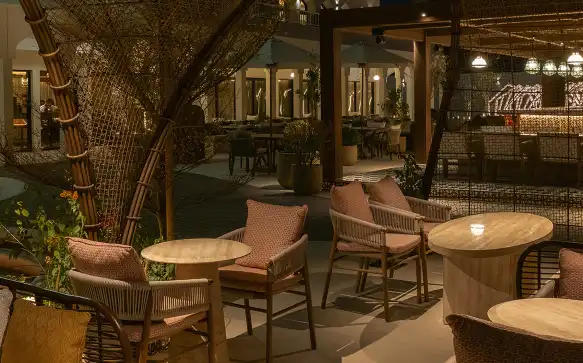
Gerbou is the kind of restaurant that makes Dubai feel more rooted, more generous, and much more interesting. In Nad Al Sheba, away from the city’s shinier clichés, it offers something that feels deeply valuable right now: a contemporary Emirati table with warmth, character, and a real sense of place. This is not heritage served behind glass. It feels lived in. Welcoming. Full of memory, but also full of movement. The room seems to understand that the most compelling “new Dubai” restaurants are not the ones trying hardest to look global. They are the ones confident enough to begin at home.
- AddressNad Al Sheba, Dubai, United Arab Emirates
- NeighborhoodNad Al Sheba
- CuisineContemporary Emirati dining with regional and local influences
- VibeWarm, rooted, elegant, welcoming, culturally rich
- Best ForEmirati cooking, local flavor, long lunches, thoughtful dinners, and one of Dubai’s most grounded new restaurant experiences
- ReservationsStrongly recommended
Where Hospitality Comes First
What makes Gerbou so appealing is that it seems to begin from hospitality rather than concept. The official site describes it as a contemporary fine-dining restaurant celebrating Emirati hospitality and culture, and that word hospitality matters. A lot of restaurants can talk about culture. Far fewer know how to make culture feel warm. Gerbou appears to understand that people do not come to a place like this only to learn something. They come to feel looked after, fed properly, and welcomed into a point of view that is both personal and generous.
That is exactly why it belongs in a New Dubai: Homegrown & Regional category. It gives the city a more rooted voice. Not imported luxury, not generic cosmopolitan polish, but a restaurant that feels connected to where it is. Michelin’s description of the room leans into authentic and carefully executed dishes, Emirati hospitality, and sharing, which fits the whole mood beautifully. Gerbou sounds like the kind of place where refinement does not erase warmth. It deepens it.
Gerbou feels modern not because it turns away from tradition, but because it trusts that tradition enough to let it evolve naturally.
A Room That Feels Like an Invitation
There is something very persuasive about the tone of Gerbou. Even before you get to the food, the restaurant’s identity seems built around welcome. The name itself gestures toward that feeling, and the broader public framing around the restaurant keeps returning to ideas of home, gathering, and generosity. That matters because a restaurant like this needs more than design polish. It needs emotional credibility. It needs to feel as though the guest is being received, not processed.
That kind of atmosphere is a large part of what makes Gerbou stand out in Dubai. Many beautiful rooms in the city feel designed first and lived in second. Gerbou sounds like the opposite. It appears to be one of those places where the room exists to support the meal and the guest, not to dominate them. That difference is subtle, but it changes everything.
Emirati Flavor, Reframed with Care
The menu makes clear very quickly that Gerbou is not interested in empty nostalgia. It takes familiar ideas and gives them a slightly sharper frame without losing their emotional center. That is the smartest possible move. You want a restaurant like this to feel contemporary, but you do not want it to lose the comfort and character that make the cuisine meaningful in the first place.
The current official menu tells that story beautifully. There is a mezze board built around baba ghanoush, labneh with Ghaf honey, hummus with slow-cooked lamb, marinated olives, date salad, and khameer bread. Then dishes like charred cabbage and labneh, chicken machbous, lamb imam bayildi, tiger prawn with za’atar verde, and Wagyu kebab begin to show how the kitchen is balancing regional memory with a more modern restaurant language. The food sounds rooted, but never static. Familiar, but still alive on the plate.
What the Meal Seems to Be About
A meal at Gerbou sounds like it is really about the pleasure of seeing local flavor treated with both affection and confidence. Not dressed up to imitate something else. Not reduced into tourist shorthand. Just given space, care, and a room that understands its value. That can be surprisingly powerful in Dubai, where homegrown dining has sometimes had to compete with louder forms of imported prestige.
The sharing style matters too. Michelin specifically points to mezze, machboos, salads, sandwiches, and the Fwala tray as part of the experience, and that communal rhythm feels exactly right. Gerbou seems to be a restaurant where conversation and appetite are meant to move together. That makes the whole thing feel more generous, and much more memorable than a colder, more formal kind of fine dining would.
To Try
Gerbou’s current menu makes the strongest orders very easy to spot.
Chicken Machbous — A traditional Emirati dish served with house achaar, kachumber salad, and yoghurt, and one of the clearest ways to understand what Gerbou is doing so well.
Tiger Prawn with Za’atar Verde — Grilled U5 prawn with the restaurant’s signature za’atar salsa verde, bringing the menu’s more contemporary side into focus without losing its regional soul.
Mezze Board — With baba ghanoush, labneh with Ghaf honey, hummus with slow-cooked lamb, date salad, and khameer bread, this is the warmest possible introduction to the spirit of the house.
Why It Matters in Dubai Right Now
Gerbou matters because Dubai needs more restaurants that feel authored from within the region rather than borrowed from outside it. The city’s dining scene has matured enormously, and one of the clearest signs of that is the rise of restaurants willing to treat Emirati and wider regional food not as supporting material, but as the center of the story. Gerbou seems to do that with real grace.
Within this category, it plays an especially important role. Kinoya may represent one kind of homegrown success, 3Fils another, Jun’s another, and 21 Grams another still. Gerbou gives the group its most directly rooted Emirati voice. That makes it essential. A “New Dubai” category without a restaurant like this would feel incomplete.
How to Approach the Table
The best way to do Gerbou is to lean into the spirit of sharing. Order across the menu. Let the table move between dips, breads, vegetables, seafood, and one or two stronger mains. This does not feel like a restaurant that wants a rigid, formal course structure. It feels more persuasive when the meal stays communal and generous, which is very much in line with the hospitality it seems to value.
It also sounds like the kind of place worth taking your time in. Not because the room demands ceremony, but because the food and the mood both seem to reward a slower meal. Gerbou feels like one of those tables where the restaurant’s deeper personality reveals itself in the way the dishes gather over time.
Our Insight
What makes Gerbou so attractive is that it seems to understand how powerful local confidence can be. The room does not need to overstate itself. The menu does not need to disguise where it comes from. The hospitality does not need to perform warmth because warmth is already built into the idea of the place. That kind of ease is very hard to fake, and it is part of what gives the restaurant its pull.
Dubai is becoming much more interesting as a food city when its most memorable restaurants begin speaking more clearly from where they are. Gerbou sounds like one of the tables doing exactly that. It feels rooted, current, and deeply comfortable in its own voice.
If you want one Dubai table that brings local flavor, Emirati generosity, and the city’s newer culinary confidence into the same room, Gerbou is the reservation.
Michelin Guide:
View Michelin Guide listing
Official Website:
gerbou.com
Menu:
View current menu
Visit Dubai:
View Visit Dubai listing
Instagram:
@gerboudubai
Reservations / Phone:
+971 4 222 6888
Address:
Nad Al Sheba, Dubai, United Arab Emirates
Hours:
Daily 7:00am–11:00pm
Looking for more homegrown tables in Dubai? This guide is part of our
New Dubai: Homegrown & Regional
edit, featuring the restaurants shaping the city through local character, rooted hospitality, and a stronger sense of place.