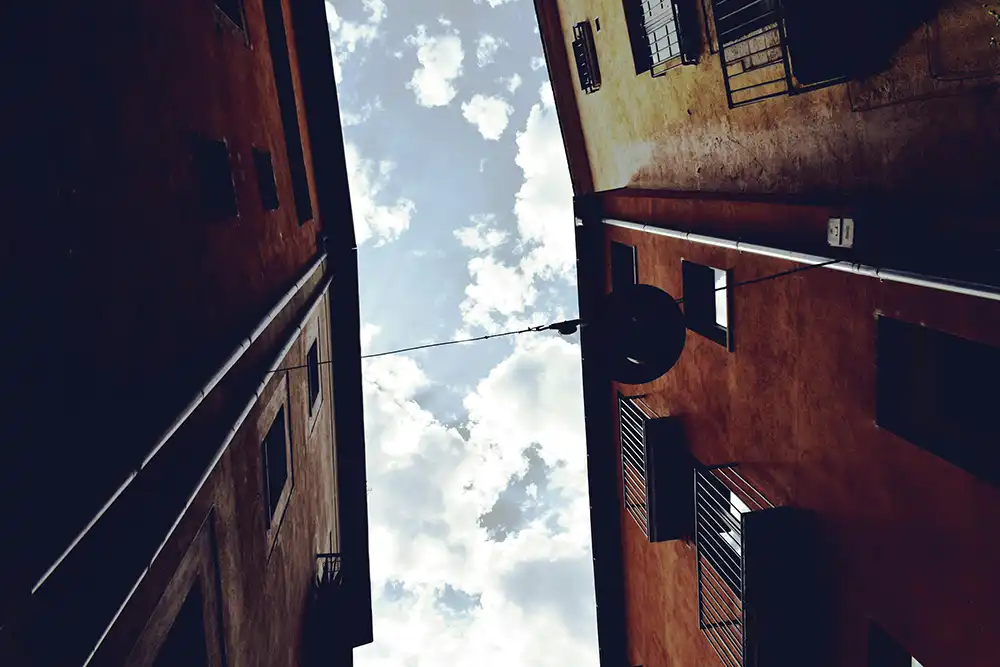
Bologna does not reveal itself all at once. It builds slowly, in layers — through long arcades, quiet courtyards, the rhythm of footsteps under porticoes that seem to stretch endlessly. The city carries a different kind of energy than Tuscany. Less romantic in the obvious sense, more grounded, more lived-in. And somewhere between a morning espresso and a late afternoon meal, you begin to understand why this region is often called the true heart of Italian cooking.
Emilia-Romagna does not chase trends. It refines tradition. This is where pasta is not just food, but structure — something precise, practiced, repeated until it becomes instinct. You see it in the windows of small shops, sheets of dough rolled impossibly thin, hands moving without hesitation, filling, folding, sealing. There is no performance in it. Just repetition, and the quiet confidence that comes from doing something well for a very long time.
Walking through Bologna in the afternoon, the city feels suspended between movement and pause. Students pass quickly, locals move more slowly, and somewhere inside almost every building, something is being prepared. The smell of butter, flour, and warm cheese drifts out in soft waves. It is subtle, but once you notice it, it is everywhere.
Where pasta becomes something else
The first time you sit down for a proper meal here, the menu feels familiar at a glance — tortellini, tagliatelle, lasagna — but the experience is different. The dishes carry weight, not in heaviness, but in intention. You are not just eating pasta. You are eating something that has been shaped by place, by habit, by generations of repetition.
And then there are the filled pastas. The ones that seem almost too simple when described, but reveal themselves slowly once you begin. Ravioli with ricotta and spinach is one of those dishes. It does not try to dominate the table. It sits there quietly, often with nothing more than butter and sage, or a light sauce that allows the filling to speak.
In Bologna, the most memorable dishes are often the ones that say the least.
The first bite is softer than expected. The pasta gives way easily, the filling almost dissolving, but not entirely. There is structure, but also lightness. The ricotta is not heavy. It is clean, slightly sweet, carrying just enough richness to feel complete. The spinach adds depth, a quiet bitterness that keeps everything balanced.
It is the kind of dish that does not overwhelm you. Instead, it draws you in slowly, one bite at a time, until you realize you are paying attention in a different way.
The discipline behind simplicity
What makes dishes like this so enduring is not creativity in the modern sense. It is discipline. The understanding that when something works, you do not need to add to it. You refine it. You repeat it. You respect it.
Ricotta and spinach appears across Italy, but here, it feels particularly at home. The balance is precise, the proportions thoughtful, the execution consistent. It reflects the broader philosophy of the region — that good cooking is not about doing more, but about doing things properly.
You begin to notice how little separates a good version from a great one. The texture of the filling. The thinness of the pasta. The restraint in the sauce. None of these are dramatic decisions, but together they create something that feels complete.
That is what stays with you. Not a single element, but the way everything fits together without effort.
Why it translates so well at home
Some dishes belong entirely to the place where you first experience them. Others travel well, not because they are easy, but because their foundation is strong. Ricotta and spinach is one of those.
At home, it becomes less about replication and more about interpretation. You are not trying to recreate Bologna perfectly. You are working within the same idea — balance, restraint, simplicity — and allowing it to take shape in your own kitchen.
The beauty of it is that it does not demand perfection. It asks for attention, for care, for a willingness to adjust slightly as you go. It is a dish that feels natural to make, even the first time.
If you want to bring this into your own kitchen, you can start here — make our ricotta and spinach ravioli.
The rhythm of the table
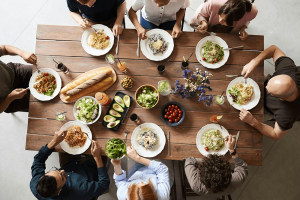
Meals in Bologna do not feel rushed. Even when they are simple, they carry a sense of structure that encourages you to slow down. Pasta is not just a course. It is a moment. Something to focus on, even briefly, before moving on.
That rhythm is part of what makes the experience memorable. The way the meal unfolds, the way conversation moves alongside it, the way nothing feels forced or accelerated. It is not about indulgence. It is about presence.
And somewhere in that pace, you begin to understand something that is easy to miss elsewhere — that food does not need to compete for attention when it is made well. It holds its place naturally.
The best meals are not the ones that impress you instantly. They are the ones you continue thinking about afterward.
You leave the table without urgency. The city is still there, unchanged, but your attention has shifted slightly. You notice more. You move more slowly. You carry the meal with you, not as a memory of flavor alone, but as a reminder of how it felt.
And when you eventually return home, that is the part you try to recreate. Not just the dish itself, but the calm, the balance, the sense that something simple, done properly, is enough.