Cocido Madrileño isn’t just a dish—it feels more like something that unfolds over time. You don’t approach it in a single step, and it doesn’t arrive all at once. It builds, slowly, quietly, in a pot that’s been working long before anyone sits down.
It starts simply enough.
Chickpeas, meat, bones, vegetables—all placed together without much ceremony. At first, it looks like too much, like nothing could really come together from it. But given time, something shifts.
The broth comes first.
Clear, deep, carrying everything that’s been simmering into something that feels both light and full at the same time. It’s usually the first thing you taste, almost as a way of easing into what’s coming next.
Then everything else follows.
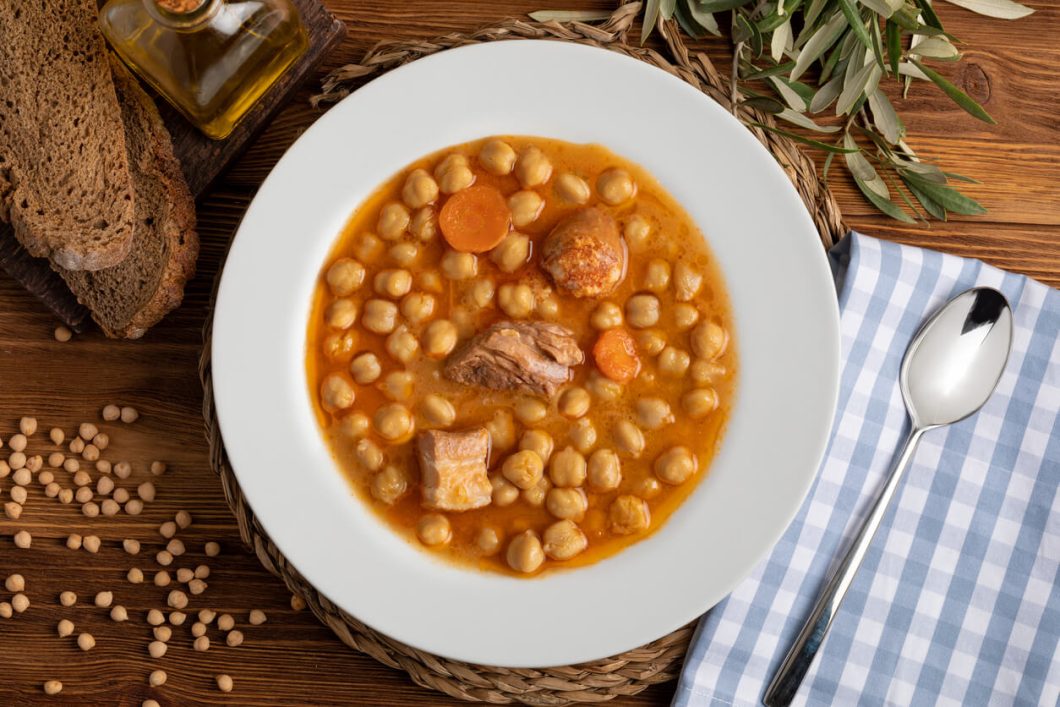
The chickpeas, soft but still holding their shape, the vegetables that have taken on all that flavor, the meats that have slowly given in, becoming tender without losing themselves entirely. Each part feels complete on its own, but together they form something bigger.
It’s not meant to be rushed.
You move through it in stages, one plate leading to the next, letting the meal stretch naturally. There’s no need to hurry, no need to condense it into something smaller than it is.
Because that’s the point.
Cocido Madrileño isn’t just about what’s in the pot—it’s about the time around it. The way it slows everything down, the way it asks you to stay at the table a little longer than you planned.
And once you’re in it, you don’t really want to leave.
Prepare the Base: In a large stock pot, add the soaked chickpeas, beef shank, chicken, ham bone, chorizo, and optional morcilla. Fill the pot with enough water to cover all the ingredients by several inches.
Add Vegetables and Simmer: Add the onion, carrots, potatoes, leek, garlic, and optional cabbage and turnip. Bring the mixture to a boil, skimming off any foam that forms on the surface. Reduce heat to a gentle simmer. Season with salt.
Cook Slowly: Cover and simmer slowly for about 2-3 hours, or until the meats are tender and the chickpeas are cooked through.
Serve in Stages: First, strain the broth and serve it as a soup, possibly with some noodles added. Then, serve the meats, sausages, and vegetables as the main course. Traditionally, chickpeas and vegetables are served on one plate, while meats and sausages on another.
Ingredients
Perfect Wine Pairing:
- Rioja Crianza: A robust and oaky Rioja Crianza can withstand the rich flavors of the cocido, complementing the meat and the dish’s complexity.