
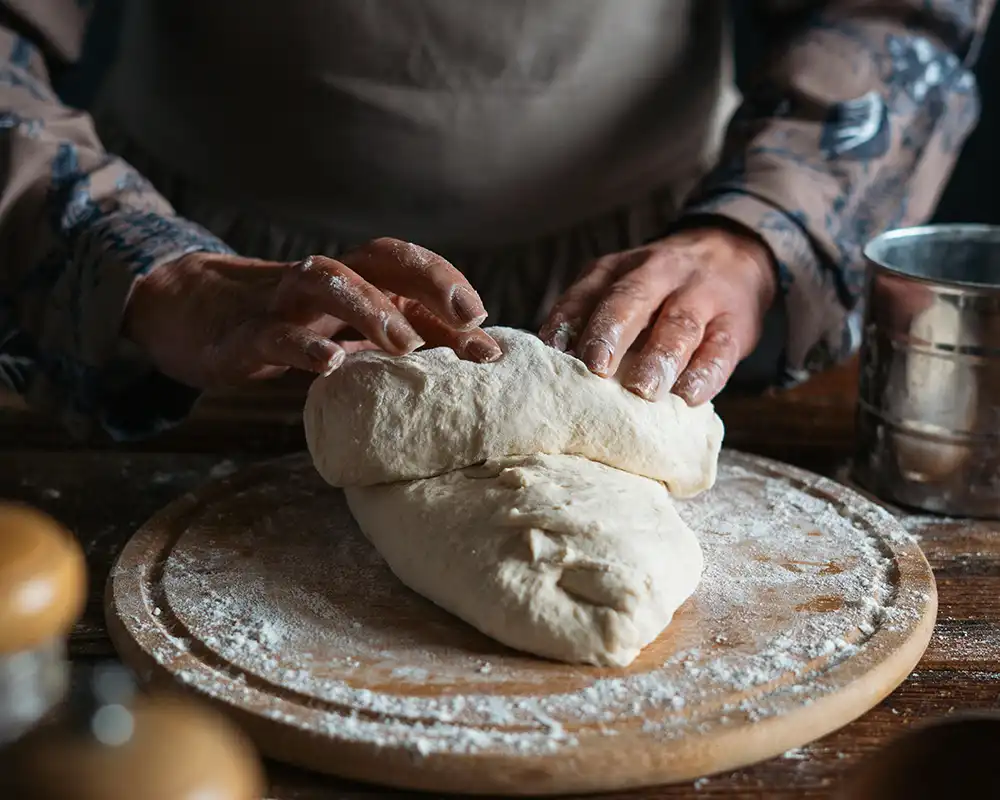
Bread has a way of making a place feel lived in before anything else does. You notice it in the smell first, always—that warm, slightly sweet, almost grounding aroma that drifts out of an oven and settles into the room long before anyone takes the first bite. It changes the atmosphere immediately. A kitchen feels fuller with bread in it, more complete somehow, as if something essential has finally arrived. Pizza begins in much the same place, not with toppings or sauce or the final shape it will take on the table, but with dough, with waiting, with the quiet understanding that the best things made from flour rarely respond well to impatience.
There’s something deeply human about working with dough. It doesn’t hide what it needs from you. If it’s too dry, you feel it. If it’s overworked, it tells you. If it hasn’t rested long enough, it resists you in a way that no recipe can fully explain. And when it’s right—when it has had the time it needs, when the structure has developed and the surface has softened just enough—you feel that too. It’s one of those rare things in cooking that becomes clear through touch before anything else. The dough changes in your hands and, with it, your whole relationship to what you’re making shifts. You stop forcing it. You start following it.
The Rhythm of Dough and Time
That might be what bread teaches better than almost anything else: restraint—not as limitation, but as understanding. Flour, water, salt, yeast—on paper, there’s almost nothing there. And yet with time, heat, and care, those simple ingredients become endlessly expressive. One loaf can be dense and dark, another open and airy; one crust soft and yielding, another deeply caramelized and brittle enough to crackle when you tear into it. The ingredients stay the same, but what they become depends entirely on how patiently you let them develop.
Pizza carries that same lesson, but in a more immediate, more social way. Bread can feel private, almost intimate—something made for the house itself—while pizza feels like an invitation. It asks to be set in the center of the table, meant to be shared, meant to disappear in pieces, meant to gather people around it without explanation. But underneath that ease is the same quiet work. Good pizza still begins in dough that has been given enough time to become itself. It still depends on balance, on a crust that holds structure without feeling heavy, on heat strong enough to transform it quickly without flattening its character.
Where Heat Does the Real Work
That’s part of what makes both bread and pizza so compelling. They’re simple enough to feel familiar, but never so simple that they become predictable. The more time you spend around them, the more you notice how much nuance lives inside that simplicity. Hydration changes everything. Fermentation changes everything. The way dough is shaped, the way it’s handled after rising, the heat of the oven, the surface it bakes on, the amount of air left inside it—all of it matters, and none of it feels separate from the final result.
Travel deepens that understanding in a way nothing else really can. Bread shifts from place to place in ways that quietly tell you how people live. In one city, it’s dense and practical, built for everyday meals without ceremony. In another, it feels almost reverent, crafted with such precision that even the crust seems intentional in its sound. Pizza follows the same pattern. In some places, it’s spare—barely more than dough, sauce, and heat—trusting restraint more than abundance. Somewhere else, it leans into generosity, into layered toppings and richer textures, into a different idea of comfort.
Why It Always Comes Back to the Table
What’s beautiful about that is how personal it becomes. Everyone remembers a bread moment. A loaf torn while still too warm, even though you knew you were supposed to wait. A bakery visited early, before the day fully started, when the shelves still looked untouched and the air carried that unmistakable warmth. A pizza eaten late, maybe standing, maybe surrounded by conversation you barely remember, except that it felt exactly right for where you were.
These foods stay with people because they don’t just feed—they attach themselves to memory. They absorb atmosphere, timing, company. They become part of the setting.
And maybe that’s because both bread and pizza ask for trust long before they ask for heat. You mix the dough and then you wait. You shape it and then you wait again. You watch something rise without being able to rush it forward. Nothing important happens instantly. Flavor builds slowly. Structure develops quietly. The air that gives a loaf its openness or a crust its lightness is gathered over time, not forced in at the end.
That patience changes the experience of eating it, too. Bread at the table can feel humble or generous depending on the moment, but it always brings something grounding with it. Pizza does something slightly different—it brings movement. It invites hands, conversation, that effortless rhythm of sharing where no one really waits their turn.
And once you’ve spent enough time around both, you begin to understand that what you’re really learning isn’t just dough or fermentation or heat. You’re learning rhythm. You’re learning when to step in and when to step back. You’re learning how to recognize readiness not because a timer tells you, but because everything feels aligned in a way that doesn’t need explaining.
That’s probably why bread and pizza endure the way they do. Not because they’re simple—but because they take something simple and allow it to become something deeply felt. Something warm enough to gather around, structured enough to trust, and generous enough to share without needing to prove anything at all.
Pizza Stracchino e Rucola,
Pizza Pesto e Gamberi,
Pizza Fichi e Prosciutto Crudo, and
Pizza Quattro Formaggi.