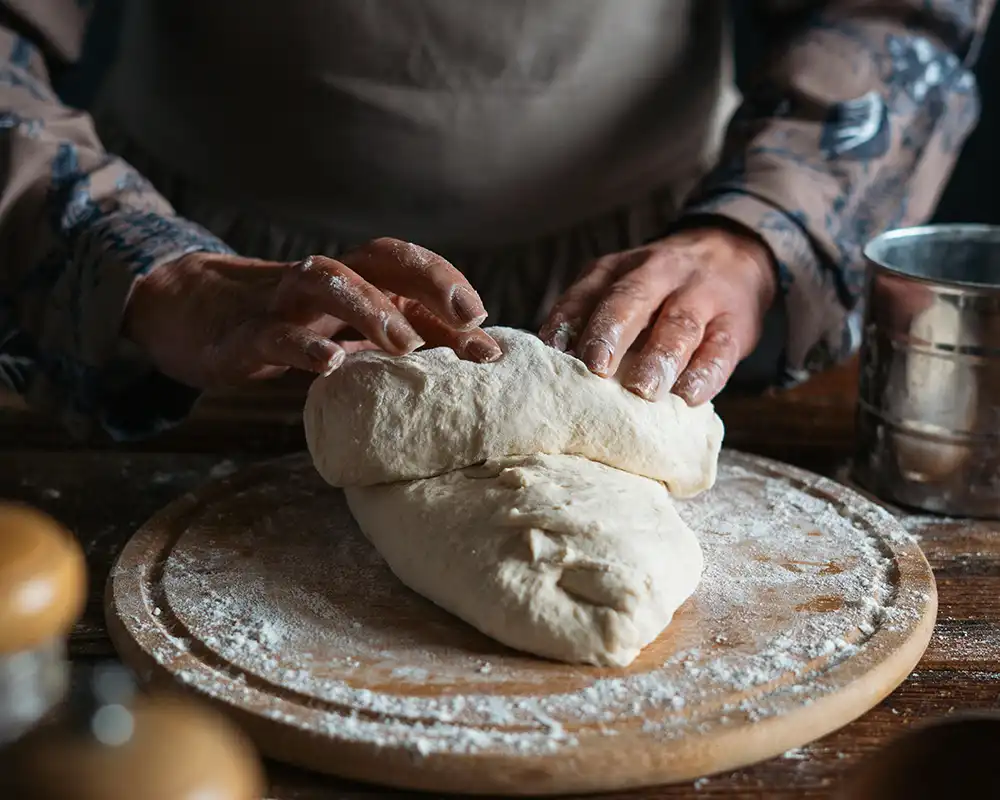
Bread instantly makes a place feel lived in. The smell is the first thing you notice: warm, a little sweet, and comforting. It drifts from the oven and fills the room before anyone even takes a bite. The atmosphere changes right away. A kitchen feels fuller and more complete, as if something important has arrived. Pizza starts the same way. It begins with dough, patience, and the understanding that flour-based foods rarely reward impatience, not with toppings or sauce.
Working with dough feels deeply human. It shows you what it needs. If it’s too dry, you notice. If you overwork it, you can tell. If it hasn’t rested enough, it pushes back in a way no recipe can really explain. And when it’s ready—when it’s had enough time, when the structure is there, and the surface is just soft enough—you sense that too. It’s one of those rare parts of cooking where touch tells you more than anything else. The dough changes in your hands, and your approach changes with it. You stop forcing it and start following its lead.
The Rhythm of Dough and Time
Bread teaches restraint, not as a limit but as understanding. Flour, water, salt, and yeast seem simple on paper. But with time, heat, and care, they become something special. One loaf might be dense, another light. One crust is soft, another crisp and caramelized. The ingredients stay the same, but what they become depends on the patience. Pizza teaches the same lesson, but in a more social and immediate way. Bread can feel private and almost intimate, like something made just for home. Pizza, on the other hand, feels like an invitation. It belongs in the center of the table, ready to be shared, broken into pieces, and to bring people together without needing a reason. Still, beneath that easy feeling is the same careful work. Good pizza starts with dough that’s had enough time to develop. It relies on balance: a crust that holds its shape without being heavy, and heat strong enough to transform it quickly without losing its character.racter.
Where Heat Does the Real Work
Bread and pizza are both simple and interesting, but never predictable. The more time you spend making them, the more you notice their small details. Hydration, fermentation, shaping, handling, oven heat, baking surface, and trapped air all make a difference. Every detail changes the final result. One practical way I check for dough readiness is by pressing it gently with a fingertip. If the dough slowly springs back and holds a slight dent, it usually means the gluten has developed, and it is ready to shape or bake. Paying attention to these subtle signals becomes second nature, and over time, you start to trust your touch as much as the recipe.
Travel helps you understand bread and pizza in a way nothing else can. Bread changes from place to place, quietly showing how people live. In Paris, a crisp, slender baguette is brought home daily. Its aroma is so familiar it becomes part of the city’s rhythm. In Germany, dense and hearty rye breads anchor sturdy breakfasts. In Italy, bread can be almost sacred, like the slow-rise pane di Altamura or the rosemary-topped focaccia of Liguria, where even the crust seems intentional. Pizza is similar. In Naples, it’s simple: thin, soft dough blistered by a wood-fired oven, just a lick of tomato sauce and mozzarella, the whole thing made to be eaten quickly, still steaming. In New York City, pizza takes on a different character. There, it means wide slices, a chewy foldable crust, eaten on the go, sometimes topped with nearly anything imaginable. Each tradition offers a different kind of comfort, shaped by local ingredients and the values of the people who gather around the table.
Why It Always Comes Back to the Table
What’s special about this is how personal it feels. Everyone has a memory of bread. I remember one winter morning kneading dough with my grandmother. The kitchen was quiet except for the sound of her hands shaping the loaf, and the scent of rising bread seemed to wrap the room in warmth. We didn’t talk much, but I still remember how proud she looked when she pulled the golden loaf from the oven and let me tear off the first piece. Maybe it’s tearing a loaf while it’s still too warm, even though you should have waited. Maybe it’s visiting a bakery early, before the day begins, when the shelves are full, and the air is warm. Or maybe it’s eating pizza late, standing up, surrounded by conversation you barely remember, except that it felt perfect for that moment.
These foods stay with us because they do more than feed us. They become memories. They take in the atmosphere, the timing, and the people around. They become part of the moment.
Maybe that’s because bread and pizza both ask for trust before anything else. You mix the dough and wait. You shape it and wait again. You watch it rise, knowing you can’t rush it. Nothing important happens right away. Flavor takes time to build. Structure forms slowly. The air that makes bread open or a crust light comes from patience, not from forcing it at the end.
That patience also changes how you eat it. Bread at the table can feel simple or generous, depending on the moment, but it always feels grounding. Pizza is a bit different. It brings energy. It invites hands, conversation, and the easy rhythm of sharing, where no one waits for their turn.
After spending enough time with bread and pizza, you learn a rhythm. It’s not just about dough, fermentation, or heat. You learn when to act and when to wait. Readiness isn’t about a timer; it’s about when everything feels right.
That’s probably why bread and pizza last the way they do. It’s not just because they’re simple, but because they turn simple things into something meaningful. Bread and pizza change basic ingredients into foods that feel warm to gather around, strong enough to trust, and generous enough to share. They do this without trying to impress. They invite us to connect and enjoy together.
Try our delicious pizza recipes, from creamy and herb-driven to rich, savory favorites:
Pizza Stracchino e Rucola,
Pizza Pesto e Gamberi,
Pizza Fichi e Prosciutto Crudo, and
Pizza Quattro Formaggi.