
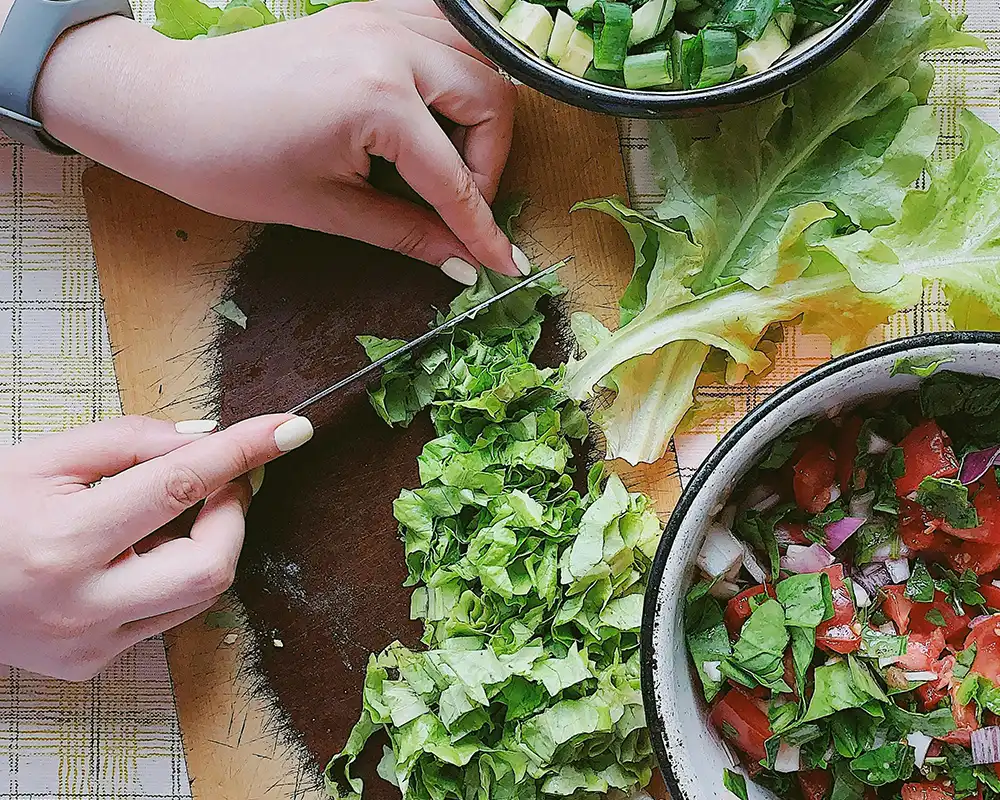
There’s a moment, just before anything touches the plate, when everything still feels separate—the greens crisp and untouched, the vegetables carrying their own weight, the dressing not yet introduced, waiting off to the side like something that could either bring everything together or completely overwhelm it. Salads live in that tension more than most dishes do. They don’t rely on heat to transform them, they don’t soften into something else over time, they don’t hide behind technique. What you see is exactly what you get, and because of that, every detail matters more than it seems at first.
It’s easy to underestimate a salad. It looks simple, almost effortless, something that comes together quickly without much thought. But the more time you spend with it, the more you realize that simplicity here isn’t the absence of effort—it’s the result of precision. Not the kind of precision that feels rigid or controlled, but the kind that comes from understanding balance. Texture, acidity, fat, freshness—all of it needs to align without any one element taking over. And unlike cooked dishes, where heat can soften edges or blend flavors together, a salad keeps everything exposed. There’s nowhere for imbalance to hide.
That’s where dressing becomes something more than just an addition. It’s not something you pour on at the end, it’s something that defines the entire structure of the dish. It carries acidity that sharpens everything else, fat that softens it just enough, seasoning that connects each element without making it feel heavy. When it’s right, it doesn’t sit on top of the ingredients—it moves through them, coating lightly, bringing everything into focus without masking what’s already there. And when it’s not right, you feel it immediately. Too much, and everything collapses. Too little, and nothing quite connects.
There’s a rhythm to building a good salad that isn’t always obvious at first. You start with something fresh, something that holds its shape, something that can carry the rest without becoming lost. Then you add contrast—not in a dramatic way, but in small shifts. Something crisp against something soft, something bright against something slightly richer. You don’t pile everything in at once. You build it slowly, letting each element find its place before introducing the next. It’s not about layering in the traditional sense. It’s about creating balance in real time.
And then comes the moment that changes everything.
When the dressing meets the ingredients.
It’s a small action, almost automatic, but it’s where the dish either comes together or falls apart. You don’t just pour and leave it. You move it, gently, making sure everything is coated without being weighed down. You pay attention to how it settles, how the leaves respond, how the textures shift slightly without losing their integrity. It’s subtle, but it’s essential. The difference between a good salad and a forgettable one often comes down to that single moment.
What’s interesting is how much this changes depending on where you are. In some places, salads feel minimal, almost restrained, built around a few ingredients that don’t need much adjustment. In others, they become more expressive, incorporating grains, proteins, layers of texture that turn something light into something more complete. But even with those variations, the foundation remains the same. Freshness first. Balance always. Nothing added without purpose.
There’s also something immediate about salads that you don’t find in slower forms of cooking. They don’t wait. They don’t hold. They exist in a very specific moment, and once that moment passes, they change. Greens soften, textures lose their contrast, everything settles in a way that feels less alive than it did when it was first brought together. That immediacy gives them a kind of presence that’s easy to overlook but hard to replicate. You’re meant to eat them as they are, not as they become.
That sense of timing carries into how they’re served as well. Salads rarely dominate a table, but they shape it more than people realize. They bring brightness where it’s needed, contrast where things might feel too heavy, a kind of reset that allows everything else to feel more defined. They don’t compete. They balance.
And once you begin to see them that way, they stop feeling like a side.
They start feeling essential.
Because what a good salad offers isn’t just freshness, but clarity. It sharpens everything around it, brings focus to the meal, creates a rhythm that moves between richness and lightness without forcing either one. It reminds you that not everything needs to be transformed to be complete, that sometimes the best thing you can do is recognize what an ingredient already is and build around that.
Dressings, in that sense, become one of the most important tools you have. Not because they’re complex, but because they’re precise. A slight shift in acidity changes everything. A little more fat softens the entire dish. Seasoning, added at the right moment, connects elements that otherwise feel separate. You don’t need many components to create something memorable, but you do need to understand how they interact.
And once you do, salads stop being something you assemble.
They become something you compose.
Mexican Bean Salad,
Salade Niçoise,
Panzanella Salad,
Cobb Salad with Grilled Chicken and Bacon, and
French Lentil Salad (Salade de Lentilles).